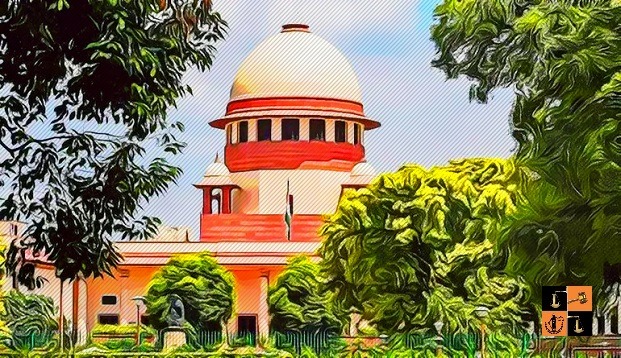
Supreme Court Clarifies Tax Treatment of Non-Compete Fees: Revenue Expenditure, Not Capital
Landmark ruling settles decades-long debate on capital vs revenue expenditure
Sharp Business System case sets precedent for corporate tax planning
By Our Legal Reporter
New Delhi: December 29, 2025:
In a landmark judgment delivered in December 2025, the Supreme Court of India resolved a long-standing controversy over the tax treatment of non-compete fees. The Court held that payments made to restrain a competitor from entering the market are revenue expenditure and therefore deductible under Section 37(1) of the Income Tax Act, 1961.
Also Read: Govt Tightens Watch on NGOs: FCRA Rules and MHA’s Crackdown on Foreign Funding
The ruling came in the case of Sharp Business System v. Commissioner of Income Tax-III, where Sharp India paid ₹3 crore to Larsen & Toubro (L&T) under a non-compete agreement. The Court’s decision overturns earlier rulings by the Delhi High Court and the Income Tax Appellate Tribunal (ITAT), which had classified such payments as capital expenditure.
Background of the Case
- Parties involved: Sharp Business System India, a joint venture between Japan’s Sharp Corporation and Larsen & Toubro (L&T).
- Transaction: In AY 2001-02, Sharp paid ₹3 crore to L&T under a non-compete agreement. L&T agreed not to enter the Indian market for electronic office equipment for seven years.
- Tax treatment dispute: Sharp claimed the payment as a deductible business expense. The Assessing Officer treated it as capital expenditure, arguing it created an “enduring benefit.”
- Earlier rulings: The Commissioner (Appeals), ITAT, and Delhi High Court upheld the AO’s view. Sharp appealed to the Supreme Court.
Supreme Court’s Observations
The Supreme Court bench of Justice Manoj Misra and Justice Ujjal Bhuyan made several key observations:
- No capital asset created: Payment of non-compete fee does not result in acquisition of a capital asset or alteration of the profit-making structure.
- Revenue in nature: Such payments only protect or enhance profitability, facilitating business operations.
- Enduring benefit test not decisive: The Court clarified that the “enduring benefit” test is not determinative. What matters is whether the expenditure creates a capital asset.
- Commercial reality: The Court emphasized that tax law must align with business realities, not rigid doctrinal tests.
Legal Context
- Section 37(1), Income Tax Act, 1961: Allows deduction of business expenditure not covered under specific provisions.
- Earlier precedents: Courts often applied the “enduring benefit” test to classify expenses.
- Supreme Court ruling: Clarifies that non-compete fees are deductible revenue expenditure, not capital.
Case Title and Bench
- Case Title: Sharp Business System v. Commissioner of Income Tax-III
- Date: December 20, 2025
- Bench: Justice Manoj Misra and Justice Ujjal Bhuyan
Impact of the Ruling
The ruling has significant implications for businesses and tax administration:
- Corporate tax planning: Companies can now deduct non-compete fees as business expenses.
- Reduced litigation: The judgment settles a long-standing controversy, reducing disputes.
- Fairness in taxation: Aligns tax treatment with commercial reality, ensuring businesses are not penalized for legitimate expenses.
- Precedent for future cases: Provides clarity for similar disputes involving intangible business arrangements.
Expert Opinions
Tax experts and legal professionals have welcomed the ruling:
- Chartered accountants believe the judgment will reduce uncertainty in tax planning.
- Corporate lawyers argue that the ruling aligns with global practices, where non-compete fees are treated as business expenses.
- Tax analysts note that the decision strengthens India’s business environment by reducing arbitrary tax demands.
Comparison with Other Cases
|
Case Title |
Court |
Key Ruling |
|
Sharp Business System v. CIT-III |
Supreme Court |
Non-compete fee deductible as revenue expenditure |
|
Empire Jute Co. Ltd. v. CIT |
Supreme Court |
Enduring benefit test not decisive |
|
Alembic Chemical Works v. CIT |
Supreme Court |
Commercial reality must guide tax treatment |
|
Madras Auto Service v. CIT |
Supreme Court |
Expenditure deductible if no capital asset created |
Broader Implications
The ruling also has implications for:
- Mergers and acquisitions: Non-compete agreements are common in M&A deals. The ruling clarifies tax treatment.
- Startups and joint ventures: Provides certainty for businesses entering non-compete arrangements.
- Tax administration: Authorities must align assessments with the Supreme Court’s directive.
Conclusion
The Supreme Court’s ruling in Sharp Business System v. CIT-III marks a turning point in tax jurisprudence. By holding that non-compete fees are deductible revenue expenditure, the Court has aligned tax law with commercial reality, reduced litigation, and strengthened corporate confidence.
This judgment settles a decades-long debate and sets a precedent for future cases, ensuring fairness and clarity in India’s tax system.
GEO Keywords for Faster Searches
- Supreme Court non-compete fee ruling India
- Sharp Business System v CIT-III case
- Non-compete fee tax treatment Supreme Court
- Section 37(1) Income Tax Act non-compete fee
- Supreme Court ruling December 2025 non-compete fee
- Revenue expenditure non-compete fee India
- Capital vs revenue expenditure Supreme Court India
- Supreme Court corporate tax planning India
- Non-compete agreement tax deduction India
- Supreme Court clarifies non-compete fee taxation
Also Read: Karnataka High Court Clarifies: Tenants Cannot Block Probate of Will