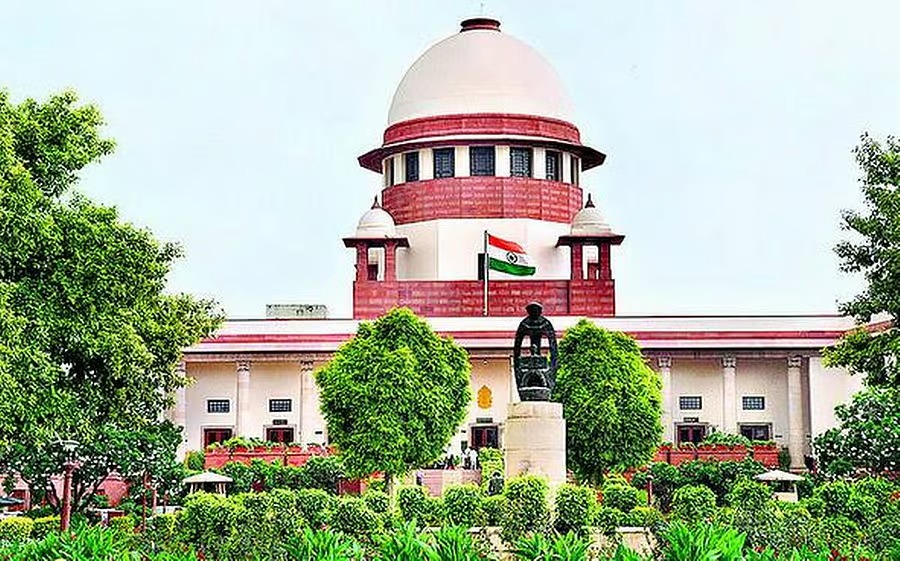
Supreme Court Clarifies: Bank’s NPA Tag Does Not Decide Limitation Period Under Insolvency Code
Court Says Debt Restructuring and Acknowledgments Extend Limitation Beyond NPA Declaration
Judgment in SBI Case Provides Clarity for Creditors and Corporate Debtors
By Legal Reporter
New Delhi: February 15, 2026:
In a landmark ruling, the Supreme Court of India has held that a bank’s internal classification of a loan as a Non-Performing Asset (NPA) does not automatically determine the limitation period under the Insolvency and Bankruptcy Code (IBC), 2016. The judgment, delivered in February 2026, resolves a long-standing ambiguity in insolvency law and provides clarity for both creditors and corporate debtors.
Also Read: Supreme Court: Absconding Accused Cannot Seek Anticipatory Bail Based on Co-Accused’s Acquittal
Background of the Case
The case arose from a dispute between State Bank of India (SBI) and M/s Metal Closure Pvt. Ltd., where SBI, representing a consortium of banks, filed an application under Section 7 of the IBC for default exceeding ₹280 crore.
- The corporate debtor argued that the loan accounts had been declared NPA as far back as 2010, making the insolvency application time barred.
- The banks countered that between 2010 and 2014, multiple debt restructuring exercises were undertaken and fresh Working Capital Consortium Agreements were executed.
- The Supreme Court agreed with the banks, ruling that limitation must be computed based on subsequent acknowledgments and restructuring, not merely the initial NPA classification.
Court’s Observations
The bench clarified several key points:
- NPA Classification Not Decisive: How a bank reflects debt in its balance sheet is not conclusive for limitation purposes.
- Acknowledgments Extend Limitation: Debt restructuring agreements and acknowledgments in balance sheets can reset the limitation clock.
- Section 7 Applications Valid: Insolvency proceedings can be initiated even years after NPA declaration if fresh acknowledgments exist.
- Judicial Consistency: The ruling aligns with earlier judgments emphasizing substance over form in insolvency disputes.
Why This Case Matters
This ruling is significant for India’s financial and legal ecosystem:
- For Creditors: Provides clarity that restructuring and acknowledgments protect their rights even after NPA classification.
- For Debtors: Ensures they cannot escape liability merely by citing old NPA dates.
- For Insolvency Law: Strengthens the IBC framework by preventing technical loopholes from undermining recovery.
- For Courts: Offers a clear precedent to resolve similar disputes efficiently.
Broader Legal Context
The IBC was enacted in 2016 to streamline insolvency resolution and reduce delays. However, limitation disputes have often complicated proceedings.
- Earlier cases like Laxmi Pat Surana v. Union Bank of India and Dena Bank v. C. Shivakumar Reddy had recognized acknowledgments as valid for extending limitation.
- This ruling builds on those precedents, specifically addressing the role of NPA classification.
- It ensures that insolvency law remains practical and aligned with commercial realities.
Also Read: Madras High Court Slams Private Firm for Profiting by Sub-Leasing Public Land Leased at ₹1
Expert Opinions
- Banking Experts: Welcomed the ruling, saying it strengthens creditor rights and ensures fair recovery.
- Legal Scholars: Noted that the judgment balances technical accounting practices with substantive justice.
- Corporate Lawyers: Cautioned that debtors must be careful when signing restructuring agreements, as they extend liability.
[Recommended Legal Resource]
For readers interested in understanding the complexities of Indian law, including succession, probate, and Supreme Court precedents, the book Will Writing Simplified [Law, Procedure and Drafting of Wills, Codicils, Revocation, Probate, Letters of Administration and Succession Certificates with Supreme Court Case Law] is highly recommended. It provides practical guidance on drafting and interpreting legal documents.
Conclusion
The Supreme Court’s ruling that NPA classification does not determine limitation under the IBC is a landmark in insolvency jurisprudence. By emphasizing debt restructuring and acknowledgments, the Court has ensured that creditors retain their rights while preventing debtors from exploiting technicalities. This judgment strengthens India’s insolvency framework and provides much-needed clarity for future disputes.
Also Read: Chhattisgarh High Court Rules WhatsApp Chats and Call Recordings Admissible in Matrimonial Disputes
Suggested Keywords for SEO & Faster Searches
- Supreme Court NPA classification IBC ruling 2026
- Insolvency and Bankruptcy Code limitation India
- SBI vs Metal Closure Pvt Ltd Supreme Court case
- Debt restructuring and limitation IBC India
- Section 7 IBC Supreme Court judgment 2026
- NPA declaration insolvency proceedings India
- Supreme Court insolvency law precedent India
- Banking law limitation disputes India
- Corporate debt restructuring India Supreme Court
- Will Writing Simplified book legal resource
Also Read: Gujarat High Court Summons Man Over Hasty Remarriage After Divorce