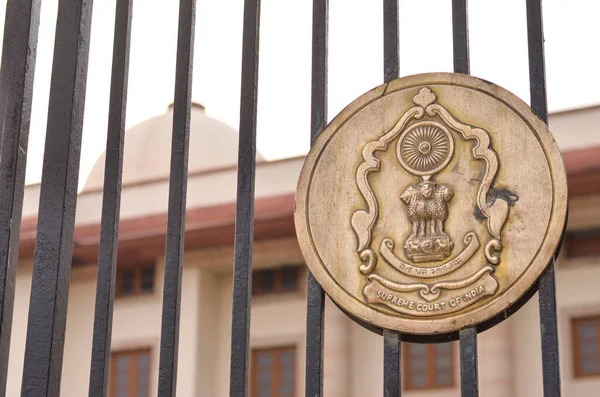
Supreme Court Quashes Cheating FIR in 11-Year-Old Kanpur Land Dispute: Declares It a Civil Matter
Court rules civil breach cannot be disguised as criminal offence
FIR against Vandana Jain and others set aside after long litigation
By Legal Reporter
New Delhi: February 27, 2026:
In a significant ruling, the Supreme Court of India has quashed a First Information Report (FIR) lodged against Vandana Jain and others in connection with a 2010 joint venture land dispute in Kanpur, Uttar Pradesh. The Court held that the allegations of cheating, forgery, and criminal breach of trust were unsustainable, as the matter was essentially civil in nature.
The judgment, delivered on February 25, 2026, by a bench comprising Justice Pamidighantam Sri Narasimha and Justice Manoj Misra, underscores the principle that civil disputes cannot be cloaked as criminal offences merely to exert pressure on the opposite party.
Background of the Case
- The dispute originated from a Joint Venture Agreement (JVA) dated August 16, 2010, involving Vandana Jain and other parties for a real estate project in Kanpur.
- The project stalled, leading to disagreements between the parties.
- In 2012, an FIR was lodged alleging cheating, forgery, and criminal breach of trust under the Indian Penal Code (IPC).
- The Allahabad High Court refused to quash the FIR, prompting the accused to approach the Supreme Court.
- After nearly 11 years of litigation, the apex court finally quashed the FIR, ruling that the allegations did not disclose any criminal offence.
[Additional Legal Resource]
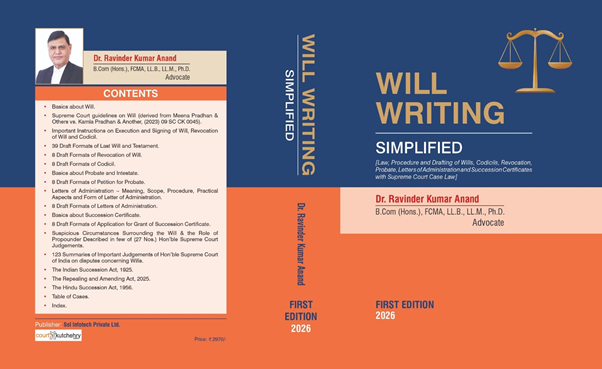
If you want practical guidance on drafting wills, codicils, and probate procedures, Will Writing Simplified is an invaluable resource. BUY TODAY: Amazon 🔹 Flipkart
Supreme Court’s Observations
- Civil breach ≠ criminal offence: The Court emphasized that disputes arising from commercial agreements must be resolved through civil remedies, not criminal prosecution.
- Forgery requires strict proof: The bench clarified that mere non-traceability of documents does not amount to forgery unless it satisfies the definition of a “false document” under Section 464 IPC.
- Misuse of criminal law: The Court warned against using criminal proceedings as a tool to settle civil scores.
- Quashing justified: Since the allegations did not disclose cheating or breach of trust, the FIR was quashed.
Also Read: New Income Tax Draft Rules: No PAN Needed for Property Deals Below ₹20 Lakh from April 1
Why This Case Matters
- For litigants: Reinforces that commercial disputes must be pursued through civil courts or arbitration, not criminal complaints.
- For judiciary: Reduces misuse of criminal law, which clogs courts and causes undue harassment.
- For governance: Strengthens the principle of separating civil remedies from criminal liability.
Expert Views
- Legal experts: Applauded the ruling, noting that it prevents misuse of criminal law in property and business disputes.
- Business analysts: Observed that the judgment will encourage investors and developers to rely on civil remedies like arbitration and contract enforcement.
- Civil rights advocates: Welcomed the decision as a safeguard against harassment through false criminal charges.
Broader Implications
- Judicial precedent: The ruling will guide lower courts in distinguishing civil disputes from criminal offences.
- Economic impact: Encourages smoother resolution of commercial disagreements, boosting investor confidence.
- Public trust: Reinforces faith in the judiciary’s role in preventing misuse of criminal law.
Conclusion
Also Read: Lok Sabha Speaker Reconstitutes Panel Probing Cash Row Against Justice Yashwant Varma
The Supreme Court’s decision in Vandana Jain & Ors. v. State of Uttar Pradesh & Ors. (2026 INSC 192) is a landmark ruling that clarifies the boundary between civil and criminal law. By quashing the FIR, the Court has reaffirmed that civil breaches cannot be disguised as criminal offences.
This judgment will serve as a precedent for future disputes, ensuring that commercial disagreements are resolved through appropriate civil remedies rather than criminal prosecution.
Keywords for SEO & Faster Searches
- Supreme Court Vandana Jain case 2026
- Kanpur land joint venture dispute
- Civil breach not criminal offence ruling
- FIR quashed Vandana Jain Supreme Court
- Section 464 IPC forgery Supreme Court
- Supreme Court property dispute ruling India
- Civil vs criminal law Supreme Court judgment
- Vandana Jain Supreme Court case details