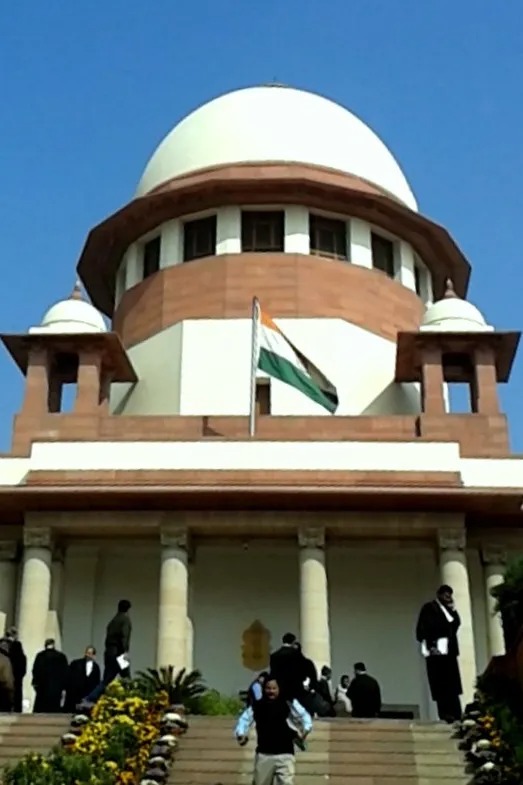
Supreme Court: Registry Cannot Question Why a Party Is Impleaded
Judges say impleadment decisions lie within judiciary’s exclusive domain
Ruling restores litigants’ autonomy and curbs registry’s interference in case management
By Our Legal Reporter
New Delhi: January 27, 2026:
In a landmark ruling, the Supreme Court of India has clarified that the court registry cannot demand explanations from litigants about why a particular party has been impleaded in a case. The Court emphasized that such questions fall strictly within the judiciary’s domain and cannot be interfered with by administrative staff.
The judgment, delivered on 25 January 2026 by a bench of Justice Dipankar Datta and Justice Satish Chandra Sharma, set aside a Telangana High Court order that had upheld the registry’s objection to the impleadment of a respondent. The ruling strengthens the principle of litigant autonomy (dominant litis) and ensures that procedural fairness is not compromised by administrative overreach.
Case Background
The dispute arose when a petitioner impleaded a particular respondent in proceedings before the Telangana High Court. The court registry objected, asking why that party had been joined. The High Court accepted the registry’s objection, effectively questioning the petitioner’s choice.
The matter reached the Supreme Court, which categorically ruled that registries cannot intrude into judicial functions. The Court observed that impleadment decisions are governed by Order I Rule 10 of the Code of Civil Procedure (CPC), which allows the judiciary—not the registry—to determine whether a party is necessary or proper.
Supreme Court’s Observations
The bench made several important points:
- Exclusive Judicial Domain: Questions of impleadment are judicial matters, not administrative ones.
- Registry’s Role: The registry’s function is limited to checking procedural compliance, not substantive decisions.
- Litigant Autonomy: Plaintiffs are dominant litis—they decide whom to implead, subject to judicial review.
- Error of High Court: By accepting the registry’s objection, the High Court blurred the line between judicial and administrative functions.
Why This Judgment Matters
Also Read: Chhattisgarh High Court Denies Child Custody to Father Living with Second Wife Without Divorce
This ruling is significant for several reasons:
- Protects Litigants’ Rights: It ensures that petitioners retain control over case strategy.
- Clarifies Registry’s Role: It prevents administrative staff from interfering in judicial matters.
- Strengthens Judicial Independence: It reinforces the separation between judicial and administrative functions.
- Prevents Delays: By curbing unnecessary objections, the ruling streamlines case management.
Wider Implications
Legal experts believe this judgment will have ripple effects across India’s judicial system:
- For Litigants: Greater clarity and autonomy in impleadment decisions.
- For Registries: A reminder to restrict their role to procedural checks.
- For Courts: Reinforcement of judicial independence and efficiency.
This ruling also aligns with earlier Supreme Court decisions emphasizing that impleadment is permissible only for necessary or proper parties, preventing unnecessary expansion of disputes.
Comparative Perspective: Registry vs Judiciary Roles
| Function | Registry | Judiciary |
| Procedural Compliance | Ensures forms, fees, and documents are in order | Reviews substantive legal issues |
| Impleadment Decisions | Cannot question or demand explanations | Decides under CPC if party is necessary/proper |
| Case Management | Administrative scheduling | Judicial discretion |
| Authority | Limited to clerical checks | Exclusive domain over legal questions |
Conclusion
Also Read: Supreme Court Warns Against Misuse of PILs, Orders Petitioner to Show Income Records
The Supreme Court’s ruling that registries cannot question why a party is impleaded is a milestone in judicial procedure. By reaffirming that impleadment decisions lie within the judiciary’s exclusive domain, the Court has protected litigant autonomy, clarified administrative boundaries, and strengthened judicial independence.
This judgment will streamline case management, reduce unnecessary delays, and ensure that justice remains firmly in the hands of judges, not clerical staff.
Suggested Keywords (SEO + ChatGPT)
- Supreme Court registry impleadment ruling
- Registry cannot question impleadment India
- Dominus litis Supreme Court judgment
- Order I Rule 10 CPC impleadment case
- Telangana High Court registry objection case
- Supreme Court judicial independence ruling
- Registry vs judiciary roles India
- Supreme Court protects litigant autonomy
- Impleadment of parties Supreme Court India
- Registry interference in judicial domain
Also Read: Bombay High Court Says Section 314 Notices Invalid Without Specific Contravention