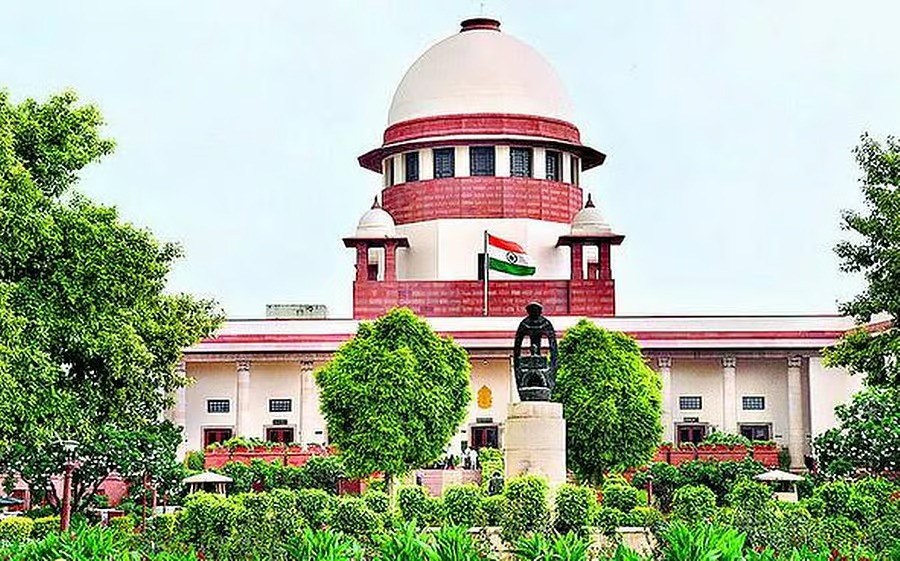
Supreme Court Rejects TN Cadre IPS Officer’s Claim for Rajasthan Cadre Vacancy of 2004
Apex Court Upholds Cadre Allocation Rules
Retrospective Claims Cannot Override Established Process
By Legal Reporter
New Delhi: February 09, 2026:
In a significant judgment, the Supreme Court of India dismissed the plea of a Tamil Nadu cadre Indian Police Service (IPS) officer who sought appointment against a Rajasthan cadre vacancy from 2004. The ruling, delivered by a bench of Justices Surya Kant and K.V. Viswanathan, reinforces the principle that cadre allocation is governed by established rules and cannot be altered retrospectively to accommodate individual claims.
Also Read: Supreme Court: States Cannot Add Extra Qualifications Beyond Union Law for Public Posts
This case highlights the complexities of cadre allocation in the All-India Services and the challenges officers face when disputes arise over vacancies and appointments.
Background of the Case
The dispute dates to the 2004 batch of IPS officers. The officer in question, originally allotted to the Tamil Nadu cadre, argued that he should have been appointed against a Rajasthan cadre vacancy. He claimed that the allocation process was flawed and that his rightful posting was denied.
The matter was contested for years, with the officer approaching the courts to seek relief. The Rajasthan High Court had earlier dismissed his claim, prompting him to appeal to the Supreme Court.
Key Observations by the Supreme Court
- Cadre Allocation Rules: The court emphasized that cadre allocation is governed by clear rules and guidelines, which must be followed strictly to ensure fairness and transparency.
- No Retrospective Claims: The bench clarified that retrospective claims cannot be entertained, as they would disrupt the established process and create uncertainty in cadre management.
- Finality of Allocation: Once cadre allocation is completed, it attains finality and cannot be reopened years later based on individual grievances.
- Balance of Interests: The court noted that allowing such claims would affect the rights of other officers and undermine the integrity of the allocation system.
Legal Significance
This ruling is important for the governance of All India Services, including the IAS, IPS, and IFS. It establishes that:
- Cadre allocation must be respected as a final process.
- Retrospective challenges to cadre vacancies are not permissible.
- The integrity of the allocation system must be preserved to maintain fairness among officers.
Legal experts believe the judgment will discourage similar disputes in the future and strengthen the cadre allocation framework.
Public and Professional Reactions
- Civil Services Community: Many officers welcomed the ruling, saying it provides clarity and stability in cadre allocation.
- Legal Scholars: Experts noted that the judgment reinforces administrative discipline and prevents misuse of litigation to alter cadre postings.
- Policy Analysts: Observers highlighted that the ruling ensures fairness in the system and protects the interests of officers who have already accepted their cadre postings.
Also Read: Supreme Court Reiterates: Section 91 CrPC Cannot Be Invoked Before Defence Stage
[Importance of Legal Awareness]
For those seeking deeper insights into Indian law and Supreme Court precedents, the book Will Writing Simplified [Law, Procedure and Drafting of Wills, Codicils, Revocation, Probate, Letters of Administration and Succession Certificates with Supreme Court Case Law] is a recommended resource. It provides practical guidance on drafting legal documents and navigating complex legal frameworks. The book is available on Amazon and Flipkart.
Conclusion
The Supreme Court’s rejection of the Tamil Nadu cadre IPS officer’s claim for a Rajasthan cadre vacancy of 2004 is a landmark ruling in the administration of All India Services. By upholding the finality of cadre allocation and rejecting retrospective claims, the court has reinforced the principles of fairness, transparency, and administrative discipline.
This judgment is expected to shape future disputes over cadre allocation, ensuring that the system remains stable and equitable for all officers.
Suggested Keywords for SEO & Faster Searches
Also Read: Delhi High Court: Ex-Directors Cannot Claim Surplus Funds Before Liabilities Are Cleared
- Supreme Court IPS officer Rajasthan cadre ruling
- Tamil Nadu cadre IPS officer Supreme Court case
- Cadre allocation rules IPS India
- Supreme Court rejects retrospective cadre claim
- Rajasthan cadre vacancy 2004 IPS case
- All India Services cadre allocation Supreme Court judgment
- IPS officer cadre dispute Supreme Court ruling
- Supreme Court case law cadre allocation India
Also Read: NRI Remittances to Parents in India: Tax Rules, FEMA Compliance and How to Avoid Notices