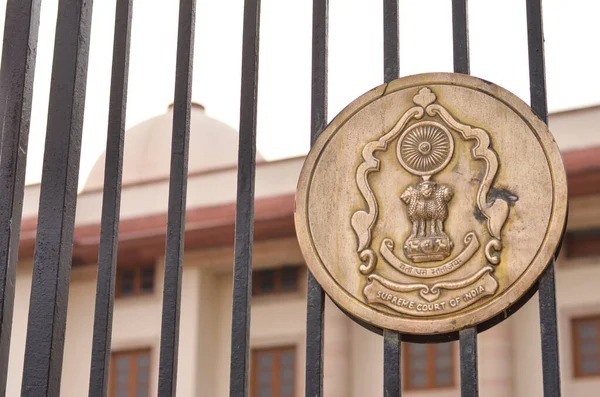
Supreme Court: States Cannot Add Extra Qualifications Beyond Union Law for Public Posts
Court strikes down state rules prescribing additional criteria for Drug Inspectors
Judges reaffirm Union’s exclusive authority under Drugs and Cosmetics Act, 1940
By Our Legal Reporter
In a landmark ruling, the Supreme Court of India has clarified that State Governments cannot prescribe qualifications for public posts that go beyond those laid down in Union legislation. The judgment came in a batch of appeals challenging state rules that imposed additional qualifications for the post of Drug Inspector, different from those prescribed under the Drugs and Cosmetics Act, 1940 and the Drugs and Cosmetics Rules, 1945.
Also Read: Supreme Court Rejects TN Cadre IPS Officer’s Claim for Rajasthan Cadre Vacancy of 2004
The Court, while striking down the state provisions, emphasized that once the Union has legislated on a subject and occupied the field, States cannot add or modify qualifications under their rule-making powers.
Background of the Case
- The case involved challenges to state rules in Madhya Pradesh and Haryana, which prescribed additional qualifications for Drug Inspectors.
- Petitioners argued that the Union law already occupied the field through Rule 49 of the Drugs and Cosmetics Rules, 1945, which lays down the qualifications for Drug Inspectors.
- The Supreme Court bench of Justices J.K. Maheshwari and Vijay Bishnoi agreed, holding that States cannot impose extra qualifications once the Union has legislated comprehensively.
- The Court set aside the state rules, reaffirming the Union’s exclusive authority in prescribing qualifications under the Drugs and Cosmetics Act.
Key Observations by the Supreme Court
- Union law prevails: When the Union has legislated on qualifications, States cannot add or alter criteria.
- Exclusive authority: The power to prescribe qualifications for Drug Inspectors lies solely with the Union Government under the Drugs and Cosmetics Act.
- State rules invalid: Additional qualifications imposed by States were struck down as unconstitutional.
- Article 309 limits: States cannot use their rule-making powers under Article 309 of the Constitution to override Union law.
- Uniformity ensured: The ruling ensures consistency in qualifications across India, preventing fragmentation.
Comparison Table
|
Aspect |
Union Law (Drugs & Cosmetics Act) |
State Rules (Struck Down) |
|
Authority |
Union Government |
State Governments |
|
Qualifications for Drug Inspectors |
Prescribed under Rule 49 |
Added extra criteria (experience, higher degrees) |
|
Legal validity |
✅ Valid |
❌ Invalid |
|
Impact |
Uniform qualifications nationwide |
Fragmentation, confusion |
Why This Ruling Matters
- For candidates: Ensures uniform qualifications across India, preventing unfair exclusion due to state-specific rules.
- For States: Clarifies limits of rule-making powers under Article 309.
- For courts: Reinforces constitutional principles of legislative supremacy.
- For society: Strengthens consistency in public appointments, ensuring fairness and transparency.
Broader Legal Context
This ruling builds on constitutional principles of legislative competence and supremacy:
- Article 246 of the Constitution: Union law prevails in matters where Parliament has legislated.
- Doctrine of occupied field: Once the Union occupies a legislative field, States cannot legislate inconsistently.
- Earlier rulings such as State of Tamil Nadu v. Adhiyaman Educational & Research Institute (1995) emphasized that States cannot prescribe qualifications beyond those set by Union law in education and professional fields.
The latest judgment extends this principle to public appointments, ensuring that qualifications remain uniform nationwide.
Risks & Limitations
- Risk of exclusion: States may argue that local needs require additional qualifications, but such rules are now barred.
- Judicial caution: Courts must balance Union supremacy with state autonomy in other fields.
- Trade-off: While ensuring uniformity, the ruling may limit States’ ability to tailor qualifications to local requirements.
Conclusion
The Supreme Court’s ruling is a landmark in constitutional and administrative law. By holding that States cannot prescribe qualifications beyond those laid down in Union law, the Court has reinforced the principle of legislative supremacy and uniformity.
This ensures fairness for candidates across India, prevents fragmentation in public appointments, and strengthens the constitutional balance between Union and State powers.
Suggested Keywords (SEO + ChatGPT)
Also Read: ITAT Delhi Deletes Transfer Pricing Adjustment, Rejects Ad-Hoc Benchmarking by TPO
- Supreme Court states cannot prescribe qualifications ruling
- Union law prevails over state rules India
- Drug Inspectors qualifications Supreme Court judgment
- Article 309 rule-making powers limits
- Supreme Court constitutional law ruling 2026
- Uniform qualifications public posts India
- Drugs and Cosmetics Act Supreme Court case
- State rules prescribing extra qualifications struck down
Also Read: ITAT Grants Relief to Charitable Trust: Section 12A and 80G Rejection Set Aside