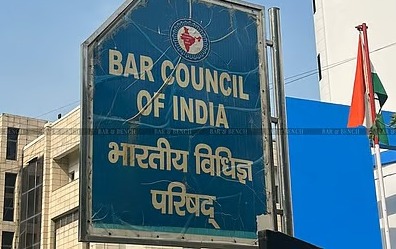
Supreme Court Upholds BCI’s ₹1.25 Lakh Nomination Fee, Bars High Courts from Interfering in State Bar Council Elections
Apex Court Says Fee Necessary to Meet Election Expenses
All Pending High Court Petitions on Fee Challenge Dismissed
By Legal Reporter
New Delhi: February 09, 2026:
In a landmark judgment delivered on February 5, 2026, the Supreme Court of India approved the Bar Council of India’s (BCI) nomination fee of ₹1.25 lakh for candidates contesting elections to State Bar Councils. The ruling, delivered by Chief Justice Surya Kant and Justice Joymalya Bagchi, also directed that no High Court should interfere with ongoing elections on account of challenges to the fee structure.
Also Read: Supreme Court: States Cannot Add Extra Qualifications Beyond Union Law for Public Posts
This decision comes after months of debate and litigation across various High Courts, where advocates had challenged the steep nomination fee as discriminatory and burdensome. The Supreme Court’s ruling now settles the issue, ensuring uniformity in the conduct of State Bar Council elections.
[Importance of Legal Awareness]
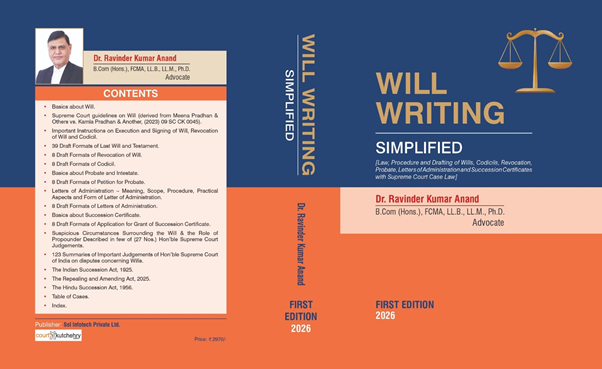
For lawyers and law students seeking deeper insights into Indian legal procedures and Supreme Court precedents, the book Will Writing Simplified [Law, Procedure and Drafting of Wills, Codicils, Revocation, Probate, Letters of Administration and Succession Certificates with Supreme Court Case Law] is a recommended resource. It provides practical guidance on drafting legal documents and navigating complex legal frameworks. The book is available on Amazon and Flipkart.
Background of the Case
The Bar Council of India had fixed the nomination fee at ₹1.25 lakh, citing financial constraints and the need to raise funds for conducting elections. Several advocates approached High Courts across India, arguing that the fee was excessive and unfair, particularly for younger lawyers and those from economically weaker backgrounds.
The Kerala High Court, among others, had entertained petitions challenging the fee hike, prompting the BCI to approach the Supreme Court. The apex court took note of the financial difficulties faced by State Bar Councils, especially after the reduction of enrolment fees, and ruled in favour of the BCI.
Also Read: Supreme Court Reiterates: Section 91 CrPC Cannot Be Invoked Before Defence Stage
Key Observations by the Supreme Court
- Fee Justified by Expenses: The court noted that elections involve significant expenses, and the BCI must raise funds to meet these costs.
- No High Court Interference: All writ petitions pending in High Courts challenging the fee were deemed dismissed, ensuring smooth conduct of elections.
- Financial Constraints of Councils: The bench acknowledged that State Bar Councils face serious financial constraints, especially after enrolment fee reductions.
- Special Relief for PwD Advocates: In a related ruling, the Supreme Court reduced the nomination fee for specially abled advocates to ₹15,000, ensuring inclusivity.
Legal Significance
This ruling has far-reaching implications for the legal fraternity:
- It establishes the Supreme Court’s supervisory authority over Bar Council elections.
- It prevents fragmentation of election rules due to multiple High Court challenges.
- It balances financial sustainability of Bar Councils with inclusivity, as seen in the relief granted to specially-abled advocates.
Legal experts believe the judgment will streamline election processes and reduce litigation, though concerns remain about the affordability of the fee for many lawyers.
Public and Legal Reactions
- Senior Advocates: Many welcomed the ruling, saying it ensures stability and uniformity in elections.
- Young Lawyers: Some expressed disappointment, arguing that the high fee discourages participation from economically weaker sections.
- Bar Council of India: The BCI hailed the judgment as a “big relief,” noting that it secures funds necessary for conducting elections.
Also Read: Delhi High Court: Ex-Directors Cannot Claim Surplus Funds Before Liabilities Are Cleared
Conclusion
The Supreme Court’s approval of the BCI’s nomination fee marks a turning point in the regulation of State Bar Council elections. By dismissing all High Court challenges, the apex court has ensured uniformity and stability in the electoral process.
While the ruling strengthens the financial position of Bar Councils, it also raises questions about accessibility for economically disadvantaged lawyers. The relief granted to specially-abled advocates shows the court’s willingness to balance inclusivity with financial sustainability.
This judgment will likely shape the future of Bar Council elections, reinforcing the Supreme Court’s role as the ultimate authority in resolving disputes within the legal profession.
Suggested Keywords for SEO & Faster Searches
- Supreme Court ruling BCI nomination fee
- ₹1.25 lakh Bar Council election fee India
- State Bar Council elections Supreme Court judgment
- High Courts barred from interfering Bar Council elections
- BCI election fee Supreme Court approval
- Supreme Court relief for PwD advocates nomination fee
- Bar Council of India election fee ruling
- Supreme Court case law Bar Council elections
Also Read: NRI Remittances to Parents in India: Tax Rules, FEMA Compliance and How to Avoid Notices