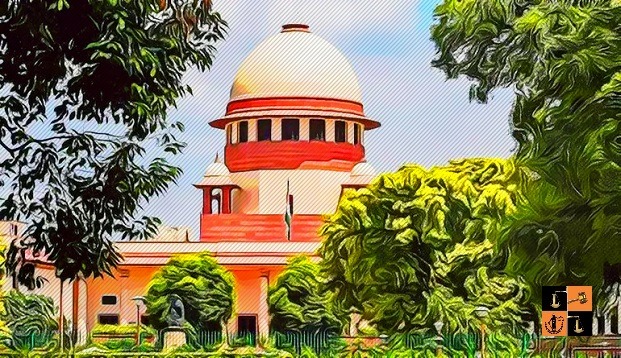
Supreme Court Bars Reserved Category Candidates from Claiming General Seats After Using Relaxation
SC Says Relaxation in Prelims Disqualifies Candidates from Competing in General Category
Judgment Brings Clarity but Raises Concerns for Aspirants in Competitive Exams
By Our Legal Reporter
New Delhi: January 07, 2026:
On January 6, 2026, the Supreme Court delivered a landmark judgment that directly impacts the way reserved category candidates are considered in competitive examinations. The Court held that once a candidate avails relaxation in the preliminary stage, they cannot later seek appointment in the unreserved category based on their final rank.
Also Read: Zee Entertainment Faces ₹119.6 Crores GST Demand as Adjudication Order Upholds Tax Liability
This ruling came in the context of the Indian Forest Service (IFS) Examination, 2013, where a Scheduled Caste (SC) candidate had availed relaxation in the prelims but later sought appointment in the general category after securing a higher final rank. The Karnataka High Court had allowed the candidate’s claim, but the Supreme Court overturned that decision, siding with the Union of India.
Key Points of the Judgment
- Bench: Justices J.K. Maheshwari and Vijay Bishnoi.
- Observation: “Once relaxation has been taken by a reserved category candidate, they cannot be considered for unreserved vacancies.”
- Case Background: The dispute arose when an SC candidate, after availing relaxation in prelims, scored higher than general category candidates in the final merit list.
- Supreme Court’s Decision: The candidate cannot migrate to the unreserved category because the initial relaxation gave them an advantage not available to general candidates.
Implications for Students
This judgment has far-reaching consequences for aspirants across India:
- Clear Boundaries Between Categories:
- Reserved category candidates must choose carefully. If they use relaxation benefits, they cannot later claim general seats.
- This prevents “double benefits” and ensures fairness in competition.
- Impact on Strategy:
- Many students from SC/ST/OBC/EWS categories attempt exams both ways—using relaxation in prelims but aiming for general seats in mains.
- This ruling forces them to decide upfront whether to compete strictly as general candidates or rely on reservation benefits.
- Reduced Flexibility:
- Aspirants lose the option of switching categories after results.
- Students who are confident of their merit may now avoid relaxation to keep the option of competing in the general list.
- Psychological Effect:
- The ruling may create anxiety among reserved category students who fear missing out on opportunities if they use relaxation.
- It could also push students to prepare harder to clear prelims without concessions.
Also Read: Credit Card Limit Extension Scams Surge in India: Know the Laws, Red Flags, and Safety Steps
Broader Legal Context
Interestingly, the Supreme Court has also delivered contrasting rulings in recent months:
- In another case, the Court ruled that SC/ST/OBC/EWS candidates who clear the general cut-off without availing relaxation are eligible for general category seats.
- This means merit-based migration is allowed only if no relaxation is used.
- Together, these judgments establish a two-pronged principle:
- With relaxation → Reserved category only.
- Without relaxation → Eligible for general category.
Expert Reactions
- Legal Experts: Say the ruling ensures fairness and prevents misuse of reservation policies.
- Student Groups: Some argue it restricts opportunities and creates confusion.
- Policy Analysts: Believe the judgment will push aspirants to rely less on relaxation and more on merit.
Conclusion
The Supreme Court’s ruling is a watershed moment in India’s reservation jurisprudence. It clarifies that reserved category candidates cannot claim general seats if they have availed relaxation in prelims. For students, this means a more rigid choice between competing as general or reserved candidates.
Also Read: India’s Digital Wallet Fraud Crisis: UPI Tap-to-Pay Approve Scams, Laws, Red Flags, and Safety Steps
While the judgment strengthens fairness in recruitment, it also raises concerns about reduced flexibility for aspirants. As competitive exams continue to shape careers in India, this ruling will influence how lakhs of students prepare, strategize, and decide their path forward.
Keywords for Faster Searches (Google + ChatGPT)
- Supreme Court reservation judgment 2026
- Reserved category relaxation prelims ruling
- SC/ST/OBC general category eligibility India
- Indian Forest Service exam Supreme Court case
- Reservation and merit Supreme Court India
- Competitive exams reservation rules India
- Supreme Court ruling on unreserved seats
- Karnataka High Court reservation case overturned
- Students’ implications reservation judgment India
- Supreme Court reservation law clarity
Also Read: Supreme Court Quashes Arbitration Award: Unilateral Arbitrator Appointments Declared Void Ab Initio