
Supreme Court: No Fresh Objections After Decree Execution Under Section 47 CPC
Court says execution objections must be raised during proceedings
Ruling reinforces finality of decrees and limits post-execution challenges
By Our Legal Reporter
New Delhi: January 31, 2026:
In a landmark ruling, the Supreme Court of India has held that Section 47 of the Code of Civil Procedure, 1908 cannot be invoked once a decree has been fully executed and execution proceedings have concluded. The case, Ananda Chandra Panda v. The Collector, Keonjhar, involved a dispute where objections were raised after possession had already been delivered under a civil decree.
Also Read: Kerala High Court: Angry Words in Quarrel Not Abetment of Suicide
The Court emphasized that litigation must have finality, and allowing post-execution objections would undermine the certainty of judicial outcomes.
(Property Dispute is Most Common legal dispute in Indian Household. The Main Reason. Lack of Clear, Legal Documents on Property Division Among Close Family Members. Is there any Legal Solution? Yes. A Well Drafted, Legal Will. However, Multiplicity of Laws makes it Challenging. To fill this Legal Gap, a well-researched book on the Will drafting and writing, has just come out in market, authored by well-known lawyer, Dr Ravinder Kumar Anand. You can purchase it from here.
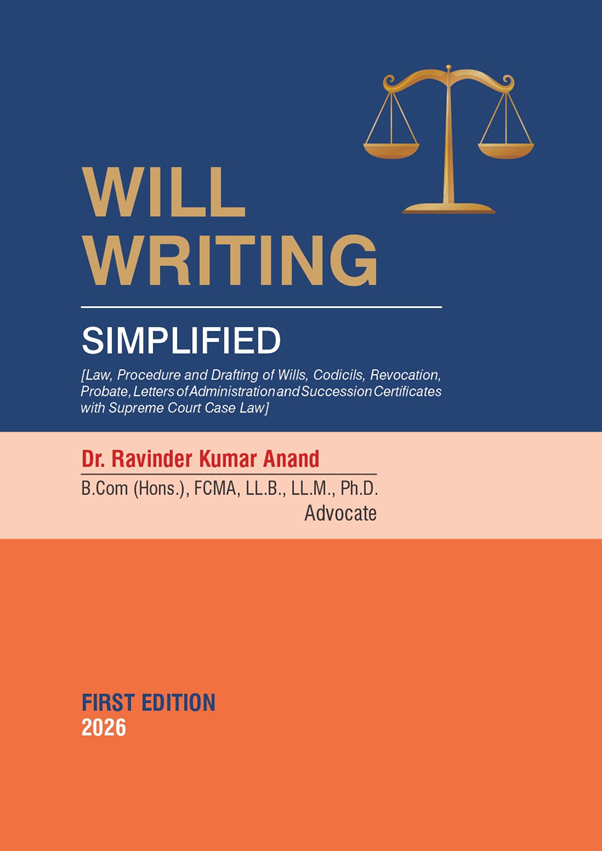
Recommended Legal Resource
For readers interested in understanding civil procedure, succession, and drafting of legal documents, the book Will Writing Simplified [Law, Procedure and Drafting of Wills, Codicils, Revocation, Probate, Letters of Administration and Succession Certificates with Supreme Court Case Law] is highly recommended. It provides practical insights into drafting and case law.
Background of the Case
- The dispute arose from a civil decree involving land possession.
- After execution proceedings concluded and possession was delivered, one party attempted to challenge the decree under Section 47 CPC.
- Section 47 deals with questions relating to execution, discharge, or satisfaction of a decree.
- The Supreme Court ruled that such objections must be raised during execution proceedings, not afterward.
Court’s Observations
- Finality of Execution: Once a decree is executed, the matter is closed.
- Scope of Section 47: It applies only to questions arising during execution, discharge, or satisfaction of a decree.
- No Post-Execution Challenges: Applications filed after execution are not maintainable.
- Judicial Efficiency: Endless challenges would delay justice and burden courts.
Legal Significance
- Strengthens Finality: Prevents reopening of disputes after execution.
- Guidance for Lower Courts: Clarifies the scope of Section 47 CPC.
- Protects Litigants: Ensures certainty in property and civil disputes.
- Limits Abuse: Stops parties from using post-execution objections as delay tactics.
Broader Implications
- For Litigants: Encourages timely objections during execution proceedings.
- For Courts: Reduces frivolous litigation and ensures judicial efficiency.
- For Legal System: Reinforces the principle that decrees must be respected once executed.
Conclusion
The Supreme Court’s ruling in Ananda Chandra Panda v. The Collector, Keonjhar is a milestone in civil procedure law, ensuring that decrees, once executed, cannot be endlessly challenged. By restricting Section 47 CPC to objections raised during execution, the Court has reinforced the principle of finality in litigation, protecting both judicial efficiency and litigant rights.
Also Read: Mumbai Taxi Scam: Laws Protecting Foreign Tourists and How Visitors Can Check Fares
Suggested Keywords for Faster Searches
- Supreme Court Section 47 CPC ruling
- Ananda Chandra Panda v Collector Keonjhar case
- Post-execution decree objections India
- Finality of decrees Supreme Court India
- Civil procedure execution ruling SC
- Section 47 CPC scope explained
- Supreme Court civil appeal 2026 India
- Execution proceedings closure SC ruling
- Landmark judgment Section 47 CPC India
- Will Writing Simplified legal resource
Also Read: Bombay High Court: Dividend Tax for NRIs Must Follow DTAA Rates, Not Higher Domestic Law