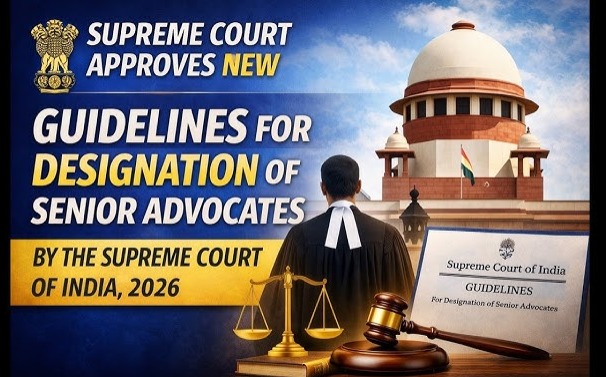
COURTKUTCHEHRY SPECIAL ON SC FRESH GUIDELINES ON SENIOR ADVOCATE DESIGNATION
Supreme Court Overhauls Senior Advocate Designation: Points System and Interviews Scrapped
New guidelines emphasize merit, standing at the Bar, and legal expertise
Court cites flaws in old system, moves to qualitative assessment
By Legal Reporter
New Delhi: February 12, 2026:
The Supreme Court of India has notified fresh guidelines for the designation of Senior Advocates, scrapping the controversial points system and interview process that had been in place since 2017. The new framework, approved unanimously in a Full Court meeting on February 10, 2026, marks a significant shift in how the country’s highest court recognizes senior members of the Bar.
Also Read: Patna High Court Rules PwD Vacancies Must Follow RPwD Act, Not State Resolutions
This change follows the Court’s May 2025 judgment in Jitender @ Kalla vs. State (Govt. of NCT of Delhi), where the bench disapproved of the earlier system, calling it “unworkable” and prone to subjectivity.
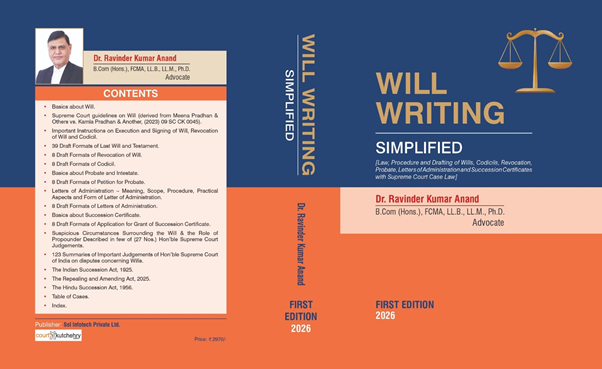
[Suggested Legal Resource]
If you want practical guidance on drafting wills, codicils, and probate procedures, Will Writing Simplified is an invaluable resource.
BUY NOW:🔹 Amazon
BUY NOW:🔹 Flipkart
Background of the Old System
- Points-based evaluation: Candidates were assessed on a 100-point scale, covering years of practice, reported judgments, publications, pro bono work, and other parameters.
- Interviews: Applicants were also subjected to personal interviews before a committee.
- Objective intent: The system was introduced after the Indira Jaising I and Indira Jaising II cases, where the Court directed that senior designation should be more transparent and merit based.
However, over time, the system faced criticism:
- Mechanical scoring: Lawyers argued that reducing professional excellence to numbers ignored qualitative aspects of advocacy.
- Subjectivity in interviews: Concerns were raised that interviews allowed bias and favouritism.
- Excessive paperwork: The process became cumbersome, requiring detailed documentation of every case and publication.
Reasons for Scrapping the Old System
The Supreme Court identified several flaws:
- Unworkable framework: Judges noted that the points system failed to capture the true standing of an advocate at the Bar.
- Bias risk: Interviews were seen as subjective, undermining fairness.
- Overemphasis on quantity: Counting judgments and publications did not necessarily reflect an advocate’s skill or contribution.
- Delay and inefficiency: The process slowed down designations, leaving deserving candidates waiting for years.
Also Read: Supreme Court Criticizes RERA: Says Authority Only Helps Builders, Not Homebuyers
Features of the New Guidelines (2026)
- Qualitative assessment: Focus on ability, standing at the Bar, and special knowledge or experience in law.
- Eligibility: Minimum of 10 years’ experience as an advocate, or combined standing of 10 years as advocate and judge/tribunal member.
- Committee composition: Limited to the Chief Justice of India and the two senior-most judges of the Supreme Court.
- Exclusion of Bar Council representatives: Unlike earlier practice, Bar members are no longer part of the designation committee.
- Permanent oversight: A permanent committee will oversee all matters relating to designation.
Why This Matters
- For advocates: Recognition will now depend on professional standing and expertise, not paperwork or interviews.
- For judiciary: The process becomes streamlined, reducing delays and disputes.
- For legal system: Ensures that senior designation reflects genuine merit and contribution to law.
Also Read: Madras High Court Directs MS Dhoni to Deposit ₹10 Lakh in Defamation Case
Wider Legal Context
The designation of Senior Advocates has long been a matter of debate in India. While the Indira Jaising cases pushed for transparency, the points system introduced thereafter proved too rigid. The Supreme Court’s latest move balances transparency with qualitative judgment, aiming to restore dignity to the designation process.
This reform also reflects the Court’s broader effort to modernize judicial administration, ensuring that recognition of seniority aligns with evolving standards of fairness and merit.
Conclusion
By scrapping the points system and interviews, the Supreme Court has signalled a decisive shift toward qualitative evaluation in senior advocate designation. The new guidelines emphasize ability, standing, and expertise, ensuring that recognition is based on genuine merit rather than mechanical scoring. This landmark change is expected to bring greater credibility, fairness, and efficiency to the process, shaping the future of the Indian legal profession.
GEO Keywords
- Supreme Court senior advocate designation guidelines 2026
- Points system scrapped senior advocate India
- SC new rules senior advocate designation
- Jitender Kalla case senior advocate ruling
- Indira Jaising senior advocate guidelines India
- Supreme Court qualitative assessment senior advocates
- Senior advocate designation reforms India
- SC scraps interviews for senior advocate designation
Also Read: Supreme Court Rejects Jairam Ramesh’s Plea Against Retrospective Environmental Clearances