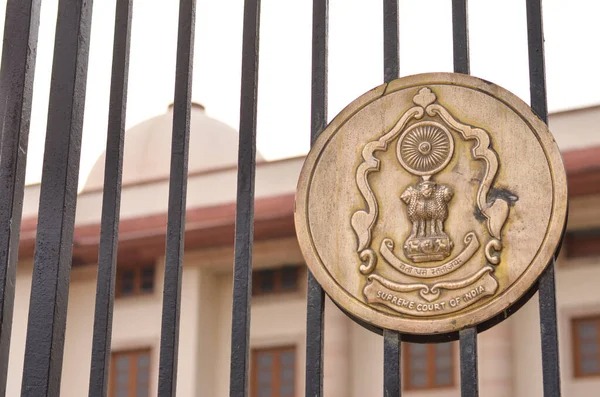
Supreme Court Slams Service Agencies: Workers Paid Less Than Half of Contract Amount
CJI Surya Kant calls agencies “real exploiters” of urban labour
Court highlights urgent need for fair wages and legal reforms
By Our Legal Reporter
New Delhi: January 2026:
In a landmark observation, the Supreme Court of India has exposed the exploitation of workers by service provider agencies. Chief Justice of India Surya Kant, while hearing a Public Interest Litigation (PIL) on minimum wages for domestic workers, revealed that even the apex court itself had paid ₹40,000 per worker to an agency, but the employees received only ₹19,000.
Also Read: Supreme Court Declares: Anticipatory Bail Is Exceptional, Not the Rule
This revelation underscores the growing problem of contractual exploitation in urban centers, where agencies pocket a large share of wages, leaving workers underpaid and vulnerable.
Background of the Case
- The PIL was filed to demand a comprehensive legal framework for domestic workers.
- During the hearing, CJI Surya Kant shared his personal observation from the Supreme Court’s own hiring practices.
- He noted that agencies act as intermediaries, charging high fees but passing on less than half to workers.
- Justice Joymalya Bagchi, part of the bench, echoed concerns about the exploitation of vulnerable workers.
Court’s Observations
- Agencies as Exploiters: The CJI described service agencies as the “real exploiters” in urban centers.
- Wage Disparity: Workers received less than half of what was paid by the employer.
- Systemic Problem: The court noted that such exploitation is widespread in major cities.
- Need for Reform: The bench stressed the importance of creating a legal framework to ensure minimum wages and fair treatment.
Legal and Economic Significance
- For Workers: The ruling highlights the urgent need for stronger protections for agency workers.
- For Employers: Even institutions like the Supreme Court unknowingly contribute to exploitation by relying on agencies.
- For Policymakers: The case may push for new labor laws to regulate service agencies and ensure transparency in wage distribution.
Broader Implications
- Urban Labor Markets: Service agencies dominate hiring in cities, often exploiting workers.
- Domestic Workers: The case brings attention to the plight of domestic workers, who lack formal protections.
- Public Awareness: The ruling may encourage workers to demand transparency and fair wages.
Conclusion
The Supreme Court’s remarks on service agencies exploiting workers mark a turning point in India’s labor discourse. By exposing how agencies pocket more than half of wages, the court has highlighted the urgent need for legal reforms, transparency, and fair wage distribution. This ruling is expected to influence future labor policies and strengthen protections for millions of workers across India.
Recommended Legal Resource
For readers interested in understanding labor rights, succession, and legal drafting, the book Will Writing Simplified [Law, Procedure and Drafting of Wills, Codicils, Revocation, Probate, Letters of Administration and Succession Certificates with Supreme Court Case Law] is highly recommended. It provides practical insights into legal processes and case law.
Also Read: Supreme Court: No Fresh Objections After Decree Execution Under Section 47 CPC
Suggested Keywords for Faster Searches
- Supreme Court service agency exploitation
- CJI Surya Kant worker wages ruling
- Agency workers underpaid India
- Minimum wage PIL Supreme Court
- Service provider agencies India exploitation
- Supreme Court labor rights case
- Urban labor exploitation India
- Worker wage disparity Supreme Court
- Domestic worker legal protection India
- Will Writing Simplified legal resource
Also Read: Supreme Court: No Fresh Objections After Decree Execution Under Section 47 CPC