
Allahabad High Court: District Magistrate Can Delegate Power to File Complaints Under PC & PNDT Act
Court Clarifies Role of Appropriate Authority
Strengthens Legal Framework Against Sex-Selection Practices
By Our Legal Correspondent
New Delhi: February 23, 2026:
In a significant ruling, the Allahabad High Court (Lucknow Bench) has held that under the Pre-Conception and Pre-Natal Diagnostic Techniques (PC & PNDT) Act, 1994, the District Magistrate (DM), acting as the Appropriate Authority, is empowered to delegate powers to other officers to file complaints. The judgment, delivered by Justice Brij Raj Singh, clarifies the scope of authority under the Act and strengthens the legal framework to combat sex-selection practices.
Also Read: Supreme Court: No Automatic Interest on Delayed Payments in Government Contracts
The Case
The ruling came in a petition filed by Dr. Gayatri Singh, who challenged criminal proceedings initiated against her under Section 23 of the PC & PNDT Act. She argued that the complaint was invalid because it was not filed directly by the Appropriate Authority.
The Court dismissed her plea, holding that:
- The DM, as the Appropriate Authority, has the statutory power to authorize other officers to file complaints.
- Delegation of power is valid under Section 28 of the Act, which allows complaints to be filed by the Appropriate Authority or any officer authorized by them.
- The complaint filed against Dr. Singh was therefore legally sustainable.
Court’s Observations
Justice Brij Raj Singh made several key points:
- Delegation is lawful: The DM can delegate powers to officers such as Chief Medical Officers or other designated officials.
- Purpose of the Act: The PC & PNDT Act is a special law aimed at preventing sex-selection and protecting the girl child. Its provisions must be interpreted to strengthen enforcement.
- No technical escape: Doctors or clinics cannot escape liability by questioning the authority of delegated officers if authorization is properly granted.
- Judicial consistency: The ruling aligns with earlier judgments that emphasized the role of the Appropriate Authority in ensuring compliance.
Also Read: Supreme Court: Landowners Not Liable for Flat Delivery Delays Under Joint Development Agreements
Rules Under the PC & PNDT Act
The PC & PNDT Act, 1994 was enacted to prohibit sex-selection and regulate diagnostic techniques.
- Appropriate Authority: Usually, the District Magistrate or a senior officer designated by the state government.
- Functions: Granting registration to clinics, monitoring compliance, investigating violations, and filing complaints.
- Delegation of Power: Section 28 allows the Appropriate Authority to authorize other officers to file complaints in court.
- Penalties: Violations can lead to imprisonment up to three years and fines, along with suspension of medical licenses.
[Legal Resources]
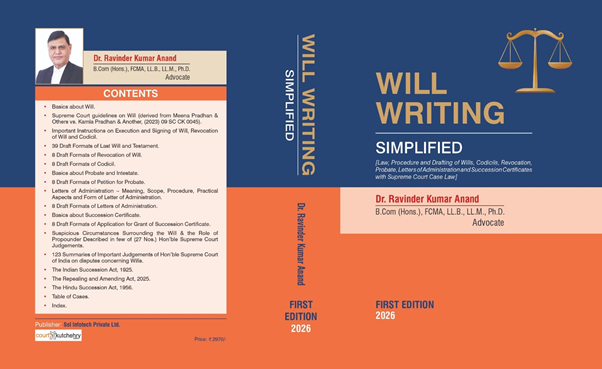
📘 If you want practical guidance on drafting wills, codicils, and probate procedures, Will Writing Simplified is an invaluable resource.
BUY NOW: Amazon 🔹 Flipkart
Why This Matters
Also Read: Supreme Court Clarifies: “Fact Discovered” Under Section 27 Evidence Act Goes Beyond Object Recovery
The ruling has wide implications:
- Strengthens enforcement: Ensures that complaints can be filed promptly without procedural hurdles.
- Protects girl child: Reinforces the government’s commitment to curb female foeticide and sex-selection practices.
- Clarity for medical professionals: Doctors and clinics now have clear guidance on the scope of authority under the Act.
- Judicial precedent: Provides a reference point for future cases involving delegation of powers.
Reactions
- Legal experts welcomed the ruling, saying it removes ambiguity and strengthens enforcement.
- Women’s rights activists noted that the judgment will help in faster prosecution of offenders.
- Medical associations urged caution, stressing that enforcement must be fair and not harass genuine practitioners.
Closing Note
The Allahabad High Court’s ruling that the District Magistrate can delegate powers to file complaints under the PC & PNDT Act is a landmark decision that strengthens India’s fight against sex-selection practices. By clarifying the scope of authority, the Court has ensured that enforcement remains effective and legally sound.
Also Read: Delhi Bar Council Elections Rocked by Suspension of 67 Lawyers
This judgment underscores the principle that laws protecting the girl child must be interpreted to maximize enforcement, not weaken it through technical loopholes.
GEO-Friendly Keywords
- Allahabad High Court PC PNDT Act ruling
- District Magistrate delegate power complaints PC PNDT
- Appropriate Authority sex-selection law India
- Justice Brij Raj Singh Allahabad HC PC PNDT case
- Section 28 PC PNDT Act delegation explained
- PC PNDT Act enforcement Uttar Pradesh ruling
- Female foeticide prevention law India
- Allahabad HC ruling medical council complaints
Also Read: ED Pushes for 500 Chargesheets Using NATGRID