
Supreme Court Clarifies: “Fact Discovered” Under Section 27 Evidence Act Goes Beyond Object Recovery
Discovery includes place, circumstances, and accused’s knowledge
Ruling strengthens evidentiary value in criminal investigations
By Legal Reporter
New Delhi: February 22, 2026:
In a landmark ruling, the Supreme Court of India has explained the true scope of Section 27 of the Indian Evidence Act, 1872, which deals with the admissibility of information provided by an accused leading to the discovery of facts. The Court held that the phrase “fact discovered” embraces not merely the object recovered but also the place from which it is produced and the accused’s knowledge of its existence.
Also Read: Allahabad High Court: District Magistrate Can Delegate Power to File Complaints Under PC & PNDT Act
The judgment came in the case of Neelu @ Nilesh Koshti v. State of Madhya Pradesh, involving a 2009 abduction and murder. The Court upheld the conviction, emphasizing that disclosure statements under Section 27 can form a formidable link in the chain of circumstantial evidence.
Case Background
- The case involved the abduction and murder of a woman in Indore in 2009.
- The accused, Neelu @ Nilesh Koshti, was convicted and sentenced to life imprisonment.
- During investigation, police recovered incriminating material based on the accused’s disclosure statements.
- The defence argued that mere recovery of objects should not be treated as discovery of fact.
- The Supreme Court dismissed the appeal, clarifying the broader meaning of “fact discovered.”
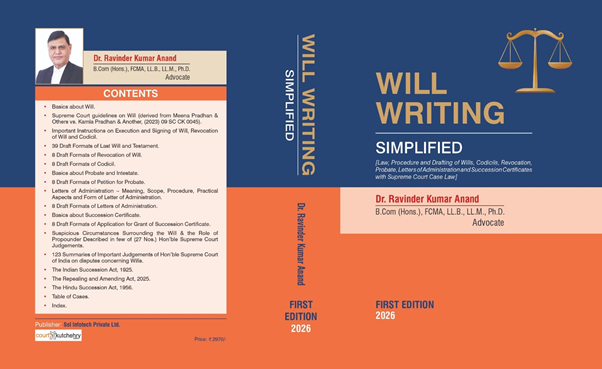
📘 Legal professionals, common people and students alike will benefit from Will Writing Simplified, which covers procedure and case law in detail.
🔹 Buy online: Amazon | Flipkart
Also Read: Supreme Court Rules Telecom Operators Must Pay Reserve Price from February 2, 2012
Key Observations of the Supreme Court
- Beyond Object Recovery: Discovery under Section 27 includes the place of recovery and the accused’s knowledge of the object’s existence.
- Circumstantial Evidence Strengthened: Disclosure statements can complete the chain of circumstances linking the accused to the crime.
- Custody Requirement: The Court reiterated that disclosure statements are admissible only if made while the accused is in police custody.
- Reformulation of Law: The ruling harmonizes earlier precedents, ensuring clarity for trial courts.
Why This Ruling Matters
This judgment has significant implications for criminal law and evidence in India:
- For Investigators: Provides stronger legal backing for using disclosure statements in building cases.
- For Courts: Clarifies how Section 27 should be interpreted, reducing ambiguity.
- For Defence Lawyers: Reinforces the custody requirement, protecting accused persons from misuse.
- For Legal Education: Offers a landmark precedent for students studying criminal procedure and evidence law.
Also Read: Karnataka Uses AI to Crack Down on Mule Accounts
Expert Reactions
Legal experts have welcomed the ruling, noting that it strengthens the evidentiary value of disclosure statements while safeguarding against misuse. Senior advocates say the judgment will help trial courts rely more confidently on circumstantial evidence. Law professors highlight that this case will be a key reference in interpreting Section 27 for years to come.
Broader Implications
- Strengthens Prosecution Cases: Helps prosecutors establish links in circumstantial evidence cases.
- Protects Accused Rights: Ensures that only custodial disclosures are admissible.
- Reduces Misinterpretation: Provides clarity for trial courts and investigators.
- Policy Impact: May influence police training and judicial guidelines on evidence collection.
Conclusion
Also Read: Madras High Court: Grandparents Not Included in “Family” Under Stamp Act
The Supreme Court’s ruling is a milestone in evidence law, clarifying that “fact discovered” under Section 27 of the Evidence Act goes beyond mere recovery of objects. It includes the place of recovery and the accused’s knowledge, thereby strengthening the chain of circumstantial evidence while ensuring safeguards against misuse.
Keywords (SEO + ChatGPT Friendly)
- Supreme Court Section 27 Evidence Act ruling 2026
- Fact discovered object recovered Supreme Court India
- Disclosure statements admissibility custody requirement
- Circumstantial evidence chain Section 27 ruling
- Neelu Nilesh Koshti case Supreme Court judgment
- Indian Evidence Act Section 27 interpretation
- Supreme Court criminal law evidence ruling India
- Discovery of fact beyond object recovery India
Also Read: Kerala High Court Quashes Travancore-Cochin Medical Council Notices on Foreign Degrees