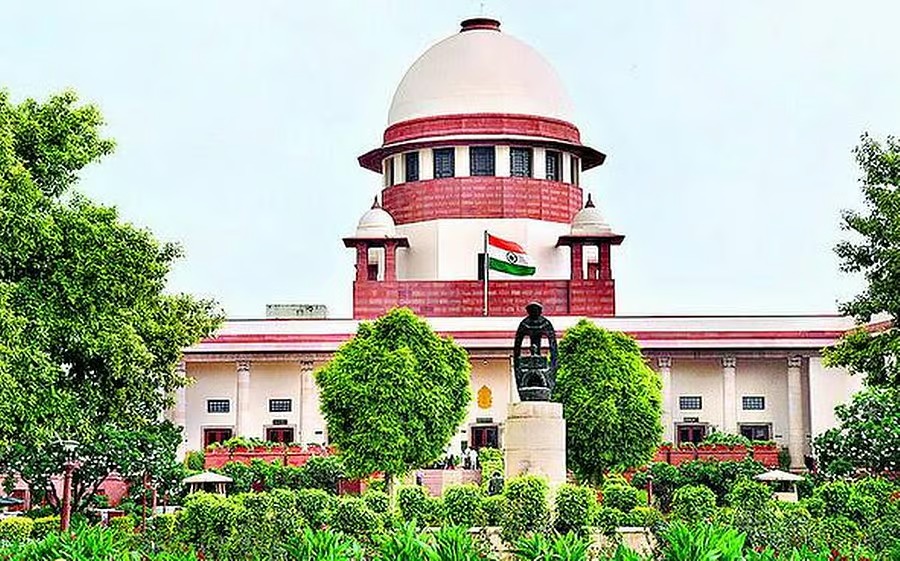
Supreme Court Rules Telecom Operators Must Pay Reserve Price from February 2, 2012
Clarifies Liability After 2G Licence Quashing
DoT Wins Appeal Against Sistema Shyam Teleservices
By Legal Reporter
New Delhi: February 23, 2026:
In a landmark ruling revisiting the aftermath of the 2G spectrum case, the Supreme Court of India has held that telecom operators whose licences were quashed on February 2, 2012 must pay the auction reserve price for continuing operations from that very date. The judgment came in the case of Union of India vs Sistema Shyam Teleservices Limited and has far-reaching implications for the telecom industry and government revenue.
Also Read: Supreme Court: No Automatic Interest on Delayed Payments in Government Contracts
Background of the Case
The controversy dates to the 2012 Supreme Court judgment that cancelled 122 telecom licences issued during the 2G spectrum allocation, citing irregularities and corruption.
- Operators like Sistema Shyam Teleservices Limited (SSTL) were allowed to continue operations temporarily to avoid disruption of services to millions of subscribers.
- The Telecom Disputes Settlement and Appellate Tribunal (TDSAT) had earlier ruled that liability to pay reserve price would begin from February 15, 2013, when fresh auctions were held.
- The Department of Telecommunications (DoT) challenged this interpretation, arguing that liability should start from February 2, 2012, the date of licence cancellation.
Supreme Court’s Observations
The Bench clarified several key points:
- Liability begins from licence quashing date: Operators continuing operations after February 2, 2012, must pay the reserve price fixed for the November 2012 auction.
- DoT cannot claim interest for delay: The Court noted that the DoT had “slept over the matter” and could not impose additional interest liability on operators.
- Revenue protection: The ruling ensures that the government is compensated for spectrum usage during the interim period.
- Sistema’s operations: SSTL continued services in 8 circles where it later won fresh licences, and in 13 circles for a shorter duration. The Court clarified liability for both scenarios.
Also Read: Supreme Court: Landowners Not Liable for Flat Delivery Delays Under Joint Development Agreements
[Legal Resources]
📘 If you want practical guidance on drafting wills, codicils, and probate procedures, Will Writing Simplified is an invaluable resource.
BUY TODAY: Amazon 🔹 Flipkart
Why This Matters
The ruling has major implications:
- Financial impact on operators: Telecom companies must pay substantial dues for spectrum usage during the interim period.
- Revenue boost for government: Ensures recovery of reserve price dues dating back to 2012.
- Legal clarity: Resolves long-standing disputes between DoT and telecom operators over liability timelines.
- Industry precedent: Sets a benchmark for future cases involving spectrum allocation and licence cancellations.
Legal Context
- 2G Spectrum Case (2012): Supreme Court cancelled 122 licences, citing corruption in allocation.
- Reserve Price: The minimum price fixed for auctioning spectrum, determined by the government.
- Section 409 IPC & Fiscal Principles: Courts consistently apply strict interpretation in fiscal matters, ensuring revenue protection.
- TDSAT vs Supreme Court: While TDSAT had given relief to operators, the Supreme Court’s ruling overrides it, favouring the government’s interpretation.
Also Read: Supreme Court Clarifies: “Fact Discovered” Under Section 27 Evidence Act Goes Beyond Object Recovery
Reactions
- Government officials hailed the ruling as a major victory for the DoT, ensuring accountability in spectrum usage.
- Telecom industry experts noted that the judgment increases financial burden on operators but provides legal clarity.
- Policy analysts suggested that the ruling reinforces the principle that spectrum is a national resource and must be used responsibly.
Closing Note
The Supreme Court’s ruling that telecom operators must pay reserve price from February 2, 2012, underscores the principle that spectrum is a public resource, and its usage must be compensated fairly. By clarifying liability timelines, the Court has ensured both legal certainty and revenue protection.
This judgment is a reminder that in fiscal matters, strict interpretation of law prevails over convenience, and operators must bear responsibility for continuing operations after licence cancellation.
Also Read: Delhi Bar Council Elections Rocked by Suspension of 67 Lawyers
GEO-Friendly Keywords
- Supreme Court telecom operators reserve price ruling
- 2G spectrum case licence quashing liability
- Sistema Shyam Teleservices Supreme Court case
- DoT appeal telecom dues reserve price
- Telecom Disputes Settlement Appellate Tribunal TDSAT ruling
- Supreme Court 2G spectrum dues February 2 2012
- Telecom operators liability spectrum usage India
- Supreme Court ruling telecom industry impact
Also Read: ED Pushes for 500 Chargesheets Using NATGRID