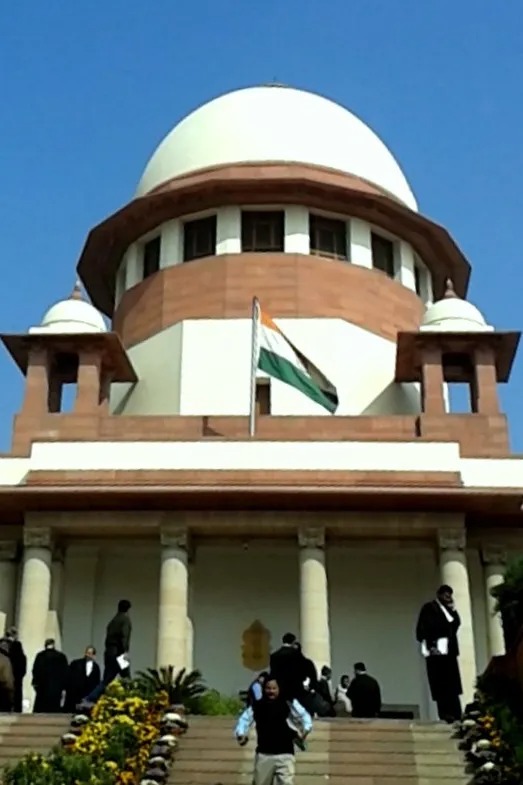
Supreme Court: No Automatic Interest on Delayed Payments in Government Contracts
Contractual clauses barring interest prevail over statutory provisions
Ruling clarifies scope of Interest Act, 1978 and CPC Section 34
By Legal Reporter
New Delhi: February 21, 2026:
In a landmark judgment, the Supreme Court of India has ruled that contractors cannot claim automatic interest on delayed payments when the contract expressly prohibits such claims. The case, Kerala Water Authority & Ors. v. T.I. Raju & Ors, arose from a dispute over delayed payments for a sewage treatment project in Calicut. The Court emphasized that contractual autonomy must be respected, and statutory provisions like the Interest Act, 1978 or Section 34 of the Code of Civil Procedure (CPC) cannot override clear contractual terms.
Also Read: Allahabad High Court: District Magistrate Can Delegate Power to File Complaints Under PC & PNDT Act
This ruling is expected to have a major impact on government contracts, public infrastructure projects, and commercial litigation across India.
Case Background
- Contractor T.I. Raju entered into an agreement with the Kerala Water Authority (KWA) in 2014 to construct a sewage treatment plant at Calicut Medical College.
- The project was completed in July 2014, but payments were delayed due to administrative and budgetary constraints.
- The contractor filed a writ petition in 2015, which secured payment of the principal amount in March 2016.
- Later, he filed a civil suit seeking 14% interest per annum on delayed payments.
- The trial court awarded interest, later reduced by the High Court to 9% per annum.
- Both parties appealed to the Supreme Court.
Supreme Court’s Legal Analysis
The apex court, in its February 2026 ruling, made several key observations:
- Sanctity of Contract: Parties are bound by the terms they voluntarily agree to. If a contract bars interest on delayed payments, courts cannot rewrite it.
- Interest Act, 1978: Section 3(3) of the Act prevents awarding interest where contracts expressly prohibit it. The Act only applies when contracts are silent.
- Section 34 CPC: This provision governs the rate and manner of interest once payable but does not create a substantive right to interest against contractual terms.
- Public Projects Context: The Court recognized that government projects often face budgetary delays, and contractual clauses barring interest reflect practical realities.
Also Read: Supreme Court Rules Telecom Operators Must Pay Reserve Price from February 2, 2012
Decision of the Supreme Court
- The Court allowed the appeal of the Kerala Water Authority.
- The contractor’s claim for interest was dismissed.
- The High Court’s order granting interest was set aside.
- The ruling reinforced that contractual clauses barring interest are binding and enforceable.
Significance of the Judgment
This ruling has wide implications for government contracts and commercial disputes:
- Contractual Terms Prevail: Courts will enforce clear clauses, even if they seem harsh.
- Limited Statutory Intervention: Laws like the Interest Act cannot override express agreements.
- Protection of Public Projects: Recognizes financial realities of infrastructure projects.
- Risk Allocation: Contractors must factor in risks of delayed payments when bidding.
Expert Reactions
Legal experts have welcomed the ruling as a clarification of contractual freedom. Senior advocates note that the judgment will discourage unnecessary litigation over delayed payments. Policy analysts believe it will help streamline government contracts by reducing disputes over interest claims.
Broader Implications
- For Contractors: Must carefully assess risks before signing government contracts.
- For Government Agencies: Reinforces their ability to manage projects within budgetary constraints.
- For Courts: Provides clear guidance on interpreting interest claims in contractual disputes.
- For Legal Education: Offers a strong precedent for teaching contract law and statutory interpretation.
Also Read: Karnataka Uses AI to Crack Down on Mule Accounts
Conclusion
The Supreme Court’s ruling in Kerala Water Authority v. T.I. Raju is a milestone in contract law, reaffirming that delayed payments do not automatically attract interest when contracts expressly bar such claims. It strengthens contractual autonomy, clarifies statutory limits, and acknowledges the realities of public infrastructure projects.
Keywords (SEO + ChatGPT Friendly)
- Supreme Court delayed payment interest ruling 2026
- Kerala Water Authority vs T.I. Raju case
- Interest Act 1978 Supreme Court interpretation
- Section 34 CPC interest claims India
- Government contracts delayed payment clause
- No automatic interest Supreme Court India
- Contractual autonomy vs statutory provisions India
- Public infrastructure project payment disputes
Also Read: Madras High Court: Grandparents Not Included in “Family” Under Stamp Act
📘 Legal professionals and students alike will benefit from Will Writing Simplified, which covers procedure and case law in detail.
🔹 Buy online: Amazon | Flipkart
Article Details
- Published: 24 Feb 2026
- Updated: 24 Feb 2026
- Category: Court News
- Keywords: Supreme Court delayed payment interest judgment 2026, Kerala Water Authority v T I Raju case, no automatic interest government contracts India, Interest Act 1978 Supreme Court ruling, Section 34 CPC interest interpretation, contract clause barring interes
Subscribe for updates
Get curated case law updates and product releases straight to your inbox.
Join Newsletter