
Madras High Court: Grandparents Not Included in “Family” Under Stamp Act
Settlement by Grandchildren Attracts Higher Duty
Court Applies Literal Interpretation of Fiscal Law
By Our Legal Correspondent
New Delhi: February 23, 2026:
In a significant ruling, the Madras High Court has held that the term “family” under the Indian Stamp Act, 1899, as amended in Tamil Nadu, does not include grandparents. This means that any settlement executed by grandchildren in favour of their grandparents will attract higher stamp duty, as concessional rates available for family transfers cannot be applied.
Also Read: Supreme Court: No Automatic Interest on Delayed Payments in Government Contracts
[ Legal Resources]
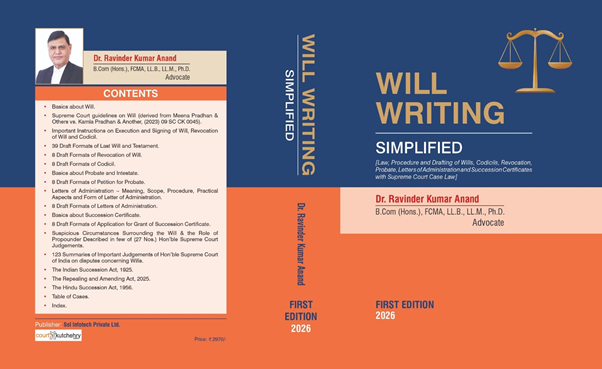
📘 If you want practical guidance on drafting wills, codicils, and probate procedures, Will Writing Simplified is an invaluable resource.
BUY HERE: Amazon 🔹 Flipkart
The Case
The matter came before a full bench comprising Justice S.M. Subramaniam, Justice Bharatha Chakravarthy, and Justice C. Kumarappan. The case involved a settlement deed executed by grandchildren in favour of their grandparent. The Inspector General of Registration had demanded stamp duty at the higher rate, arguing that grandparents were not covered under the statutory definition of “family.”
Also Read: Supreme Court: Landowners Not Liable for Flat Delivery Delays Under Joint Development Agreements
The issue was referred to the High Court for authoritative interpretation.
Court’s Observations
The Bench made several important points:
- Literal interpretation required: The Stamp Act is a fiscal statute meant for revenue generation. Courts must apply its provisions strictly and literally, without expanding or restricting definitions.
- Definition of family is exhaustive: Under Explanation to Article 58(a)(i) of the Indian Stamp Act (as amended in Tamil Nadu), “family” includes father, mother, husband, wife, son, daughter, brother, and sister—but not grandparents.
- No concessional duty for grandparents: Since grandparents are excluded, settlements in their favour must be charged at the standard stamp duty rate.
- Legislative intent matters: If the legislature intended to include grandparents, it would have expressly done so. Courts cannot rewrite fiscal statutes.
Why This Matters
The ruling has wide implications for property transfers and settlements in Tamil Nadu:
- Higher costs for families: Settlements involving grandparents will now attract higher stamp duty, increasing transaction costs.
- Clarity in law: The judgment provides clear guidance for registration authorities and citizens.
- Revenue protection: Ensures that concessional rates are applied only within the strict scope of the law.
- Potential legislative reform: The ruling may prompt calls for amending the law to include grandparents in the definition of family.
Also Read: Supreme Court Clarifies: “Fact Discovered” Under Section 27 Evidence Act Goes Beyond Object Recovery
Legal Context
- Indian Stamp Act, 1899: Governs stamp duty on documents such as property transfers and settlements.
- Tamil Nadu Amendment: Provides concessional stamp duty for transfers within “family,” but limits the definition.
- Fiscal statutes principle: Courts consistently hold that tax and revenue laws must be interpreted strictly, without judicial expansion.
This judgment aligns with earlier precedents where courts have refused to broaden definitions in fiscal laws, emphasizing that only the legislature can make such changes.
Reactions
- Legal experts noted that the ruling reinforces the principle of strict interpretation of fiscal statutes.
- Families and property lawyers expressed concern that excluding grandparents creates hardship in genuine family settlements.
- Policy analysts suggested that the legislature may consider amending the law to reflect modern family structures.
Closing Note
Also Read: Delhi Bar Council Elections Rocked by Suspension of 67 Lawyers
The Madras High Court’s ruling that grandparents are not part of “family” under the Indian Stamp Act is a landmark interpretation of fiscal law. By applying a strict and literal approach, the Court has ensured clarity and consistency in revenue matters, even though it may cause hardship in family property transfers.
This case highlights the tension between legal definitions and social realities. While the law currently excludes grandparents, the judgment may spark debate on whether legislative reform is needed to reflect broader family relationships in modern India.
GEO-Friendly Keywords
- Madras High Court Stamp Act family definition
- Grandparents not included family Indian Stamp Act
- Settlement deed grandchildren grandparents stamp duty
- Tamil Nadu Stamp Act amendment family definition
- Justice SM Subramaniam Bharatha Chakravarthy Kumarappan ruling
- Fiscal statute literal interpretation India
- Concessional stamp duty family transfers Tamil Nadu
- Madras HC ruling property settlement grandparents
Also Read: ED Pushes for 500 Chargesheets Using NATGRID