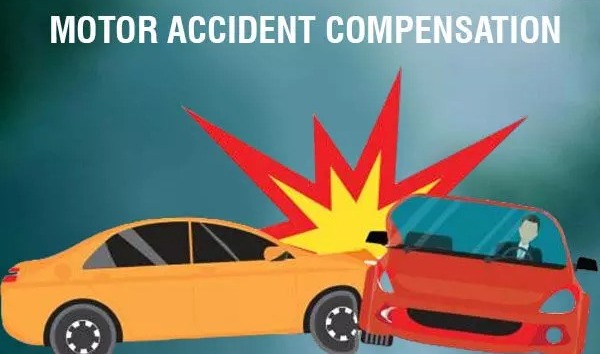
Supreme Court Rules: Compassionate Assistance Must Be Deducted from Motor Accident Compensation to Prevent Double Recovery
Top Court clarifies interplay between Motor Vehicles Act and Compassionate Assistance Rules
Judges stress fairness in compensation awards to avoid duplication of benefits
By Legal Reporter
New Delhi: February 26, 2026:
In a significant ruling, the Supreme Court of India has held that financial assistance provided to the dependents of deceased government employees under Compassionate Assistance Rules must be deducted from compensation awarded under the Motor Vehicles Act (MVA). The Court emphasized that this deduction is necessary to prevent “double recovery” for the same financial loss.
Also Read: Anthropic Accuses Chinese AI Labs of Distillation Attacks on Claude Models
The judgment, delivered by a bench comprising Justice Sanjay Karol and Justice Augustine George Masih, sets aside earlier decisions of the Punjab and Haryana High Court, which had ruled that compassionate assistance should not be deducted from motor accident compensation.
Background of the Case
- The case arose from a road accident on November 2, 2009, involving a Haryana government employee.
- Following the accident, the deceased’s family received financial assistance under the Haryana Compassionate Assistance to Dependents of Deceased Government Employees Rules, 2006.
- The family also sought compensation under the Motor Vehicles Act.
- The insurance company, Reliance General Insurance, argued that the compassionate assistance should be deducted from the motor accident compensation to avoid duplication.
- The Punjab and Haryana High Court disagreed, ruling in favour of the family.
- The matter was escalated to the Supreme Court, which overturned the High Court’s decision.
[Additional Resource]
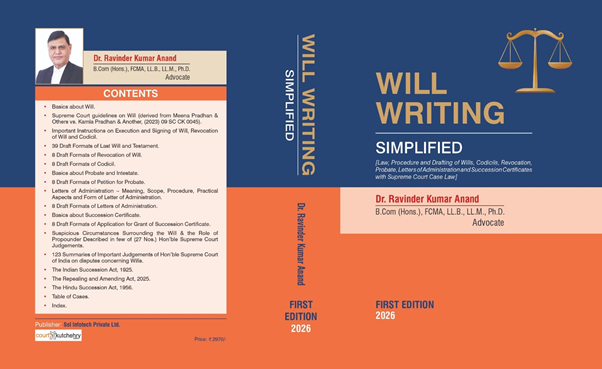
If you want practical guidance on drafting wills, codicils, and probate procedures, Will Writing Simplified is an invaluable resource. BUY NOW: Amazon 🔹 Flipkart
Also Read: Visa-Free Travel Explained: Why It Doesn’t Always Guarantee Entry
Supreme Court’s Observations
- No double recovery: The Court held that dependents cannot receive compensation twice for the same financial loss.
- Compassionate assistance is financial support: Since the assistance is meant to compensate for the loss of income due to the employee’s death, it overlaps with the compensation awarded under the Motor Vehicles Act.
- Fairness in awards: Deducting compassionate assistance ensures fairness and prevents unjust enrichment.
- Insurance liability clarified: The ruling provides clarity for insurance companies, ensuring they are not burdened with duplicate payouts.
Why This Judgment Matters
- For families of government employees: It clarifies that while compassionate assistance is valuable, it will be adjusted against motor accident compensation.
- For insurance companies: The ruling reduces ambiguity and prevents excessive liability.
- For courts: It sets a precedent for consistent application of rules across similar cases.
Expert Views
Legal experts have noted that the ruling balances compassion with fairness.
- Advocates specializing in motor accident claims argue that the judgment ensures compensation remains equitable and prevents misuse of overlapping benefits.
- Insurance law specialists believe this ruling will streamline claim settlements and reduce prolonged litigation.
Also Read: Supreme Court Rules Rooh Afza is a Fruit Drink, Attracts Only 4% VAT
Broader Implications
- Uniform application of law: The ruling will guide lower courts in similar disputes across India.
- Reduced litigation: Clear guidelines on deductions will prevent repeated appeals.
- Strengthened jurisprudence: The judgment reinforces the principle that compensation should reflect actual financial loss, not result in unjust enrichment.
Conclusion
The Supreme Court’s decision to deduct compassionate assistance from motor accident compensation is a landmark ruling that ensures fairness in the justice system. By preventing double recovery, the Court has clarified the balance between statutory benefits and compensation under the Motor Vehicles Act.
This ruling will serve as a precedent for future cases, ensuring that compensation awards remain just, equitable, and free from duplication.
Keywords for SEO & Faster Searches
Also Read: Kerala High Court: Uploading GST Orders on Portal Constitutes Valid Service
- Supreme Court India motor accident compensation
- Compassionate Assistance Rules deduction
- Haryana Compassionate Assistance Rules 2006
- Double recovery prevention Supreme Court ruling
- Reliance General Insurance motor accident case
- Justice Sanjay Karol Supreme Court judgment
- Motor Vehicles Act compensation India
- Supreme Court deduction of compassionate assistance
Also Read: Supreme Court to Examine Condonation of 30-Month ITR Delay