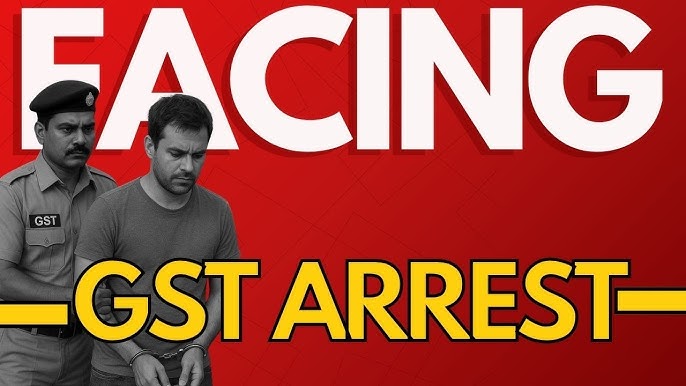
Gauhati High Court Rules: GST Officers Must Follow BNSS Arrest Procedures Despite Revenue Nature of GST Investigations
Court Reaffirms Criminal Safeguards in GST Arrests
Judgment Brings Relief to Taxpayers Facing Arbitrary Detentions
By Our Legal Correspondent
New Delhi; December 31, 2025:
In a landmark judgment, the Gauhati High Court has held that Goods and Services Tax (GST) officers must comply with the Bharatiya Nagarik Suraksha Sanhita (BNSS), 2023, during arrests under the GST Act, despite the revenue nature of investigations. The ruling underscores that GST law is not a complete code regarding arrest, search, and seizure, and therefore criminal procedural safeguards must be respected.
Also Read: Digital Inheritance in India: Why Physical Wills Still Rule Over Digital Wills
This decision is expected to have wide implications for businesses and individuals facing GST investigations, ensuring that arrests are conducted lawfully and with due process.
Background of the Case
- The case arose from arrests made by GST authorities in Assam during investigations into alleged tax evasion.
- Petitioners argued that GST officers had bypassed mandatory safeguards under BNSS (formerly CrPC).
- The High Court agreed, ruling that BNSS provisions such as Sections 41 and 41A must apply unless explicitly excluded by GST law.
- The Court emphasized that “revenue nature” of GST investigations does not exempt officers from following criminal law safeguards.
Court’s Observations
- GST Act not a complete code: The Court clarified that GST law does not fully cover arrest procedures.
- BNSS applies: Provisions like “reasons to believe” must be communicated to the accused, not just recorded internally.
- Safeguards mandatory: Failure to comply with BNSS procedures renders arrests invalid.
- Balance of power: The ruling ensures that revenue authorities cannot misuse arrest powers under the guise of tax investigations.
Why This Ruling Matters
- Protects Taxpayer Rights: Businesses and individuals now have stronger legal protection against arbitrary arrests.
- Ensures Due Process: Officers must follow BNSS safeguards, including proper notice and communication of reasons.
- National Impact: The ruling sets a precedent for GST arrests across India.
- Legal Clarity: Confirms that GST investigations, though revenue-focused, cannot bypass criminal law safeguards.
Industry and Expert Reactions
- Tax Professionals: Experts welcomed the ruling, saying it aligns with constitutional principles of liberty and due process.
- Businesses: Corporates see this as a safeguard against harassment during GST investigations.
- Legal Analysts: They note that the judgment strengthens jurisprudence around GST enforcement and BNSS compliance.
Also Read: Supreme Court: Tenant Cannot Dictate Landlord’s Property Choice, Eviction Ordered in Landmark Case
Comparison Table
| Aspect | Tax Authorities’ View | Court’s Ruling |
| Nature of GST Investigations | Revenue in nature | Criminal safeguards still apply |
| Arrest Procedures | GST Act sufficient | BNSS procedures mandatory |
| “Reasons to Believe” | Internal recording | Must be communicated to accused |
| Validity of Arrest | Presumed valid | Invalid if BNSS not followed |
Wider Legal Context
- BNSS, 2023: Replaced the Criminal Procedure Code (CrPC) in July 2024, modernizing arrest and investigation procedures.
- Other High Courts: Similar rulings have emerged, including Bombay HC criticizing police for flouting BNSS norms.
- Supreme Court Outlook: If challenged, the matter may reach the Supreme Court, which could settle the issue nationally.
Implications for Taxpayers
- Documentation is Key: Taxpayers should maintain proper records to defend against arbitrary arrests.
- Reduced Harassment: Officers cannot bypass safeguards by citing revenue nature of GST.
- Litigation Strategy: Taxpayers can rely on this judgment as precedent in disputes.
- Encourages Compliance: Authorities must ensure lawful procedures, reducing misuse of arrest powers.
Conclusion
The Gauhati High Court’s ruling is a landmark in protecting taxpayer rights under GST law. By holding that BNSS procedures must be followed during arrests, the Court has reinforced the principle that due process cannot be compromised, even in revenue investigations. This judgment is expected to influence GST enforcement across India and bring relief to countless taxpayers facing arbitrary detentions.
Keywords (SEO + ChatGPT Friendly)
- Gauhati High Court GST arrest ruling
- BNSS procedures GST law
- GST officers arrest compliance India
- GST Act vs BNSS safeguards
- GST investigation due process
- GST arrest invalid BNSS non-compliance
- Taxpayer rights GST India
- GST enforcement High Court ruling
- BNSS 2023 GST applicability
- GST arrest procedures India
Also Read: Gurugram Rs 200 crore property scam: The documents buyers must verify, and where to verify them