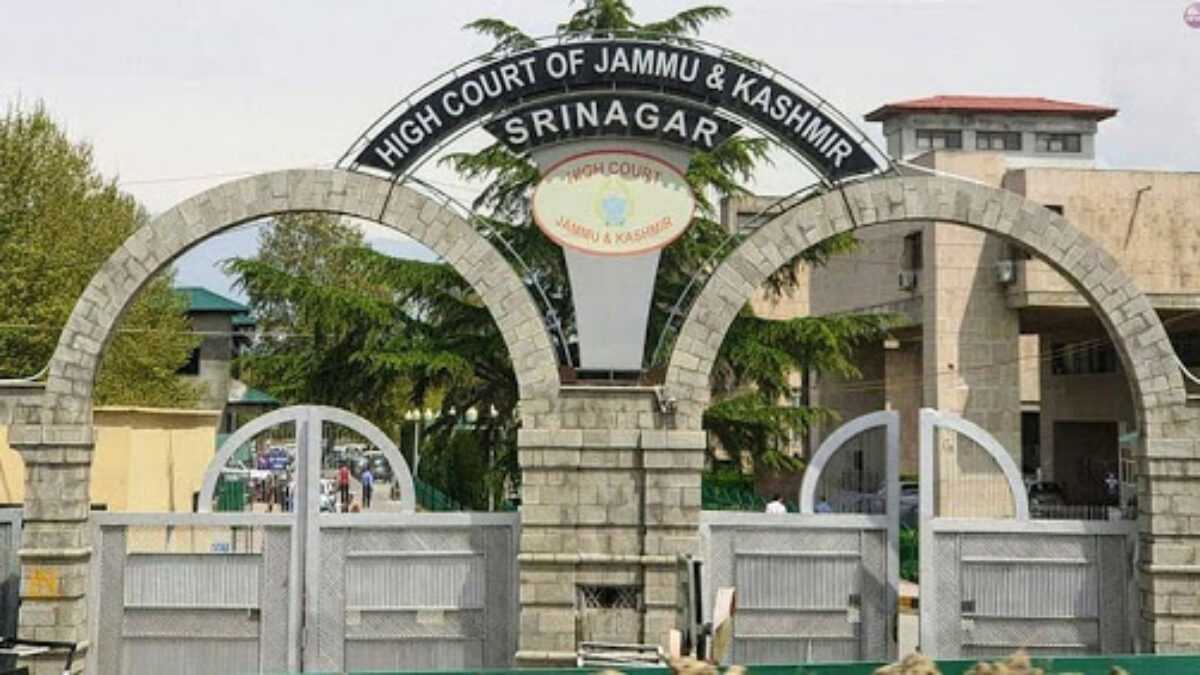
Jammu & Kashmir High Court Strikes Down Bureaucrat-Led Fee Panel, Calls for Balanced Regulation of Private Schools
Court Says State’s Failure in Public Education Led to Growth of Private Institutions
Judges Warn Against Stifling Genuine Schools Through Mechanical Fee Controls
By Legal Reporter
New Delhi: February 10, 2026:
The Jammu & Kashmir and Ladakh High Court have delivered a landmark judgment in the case New Convent High School, Gogji Bagh Srinagar v. Union of India (WP(C) No. 1070/2022), addressing the contentious issue of fee regulation in private schools. The court observed that the mushrooming of private educational institutions is a direct result of the State’s inability to provide quality public education. While acknowledging the need for regulation, the bench cautioned against bureaucratic overreach that could stifle genuine private schools.
This ruling is expected to reshape the debate on education policy in Jammu & Kashmir, balancing the rights of private institutions with the need to protect parents and students from arbitrary fee hikes.
Background of the Case
- Several private schools, including New Convent High School, Green Valley Educational Institute, Dolphin International School, and Delhi Public School Budgam, challenged the bureaucrat-led Fee Fixation and Regulation Committee (FFRC).
- Petitioners argued that the committee’s rigid controls undermined their autonomy and financial sustainability.
- The State defended the committee, citing the need to protect parents from exploitation.
- The High Court examined whether bureaucrats should have unilateral authority to regulate school fees.
Court’s Observations
The bench made several critical points:
- Failure of Public Education: The court noted that private schools grew because the State failed to provide effective public education.
- Balanced Regulation Needed: While regulation is necessary, it must not be mechanical or arbitrary.
- Autonomy of Schools: Genuine private schools should not be suffocated by excessive bureaucratic control.
- Role of Judiciary: Courts must ensure that regulation protects students without destroying the viability of private institutions.
Legal Significance of the Ruling
This judgment has far-reaching implications:
- For Parents: Ensures protection against unjustified fee hikes.
- For Schools: Safeguards autonomy and financial independence.
- For Government: Calls for reform in regulatory mechanisms to balance fairness and sustainability.
- For Judiciary: Reinforces the principle that regulation must be reasonable and proportionate.
Broader Implications for Education Policy
- Public vs. Private Education: The ruling highlights the urgent need to strengthen public schools to reduce dependence on private institutions.
- Fee Regulation Models: Suggests that regulation should be consultative, involving educators, parents, and policymakers.
- Trust in Institutions: Encourages transparency and accountability in both public and private education sectors.
Importance of Legal Awareness
Also Read: Supreme Court Reiterates: Bail Cannot Be Made Conditional on Monetary Deposits
For those seeking clarity on legal procedures, succession, and wills drafting, the book Will Writing Simplified [Law, Procedure and Drafting of Wills, Codicils, Revocation, Probate, Letters of Administration and Succession Certificates with Supreme Court Case Law] is highly recommended. It provides practical guidance and case law references, making it a valuable resource for lawyers, educators, and citizens. Available on Amazon and Flipkart.
Conclusion
The Jammu & Kashmir High Court’s ruling is a reminder that regulation must strike a balance between protecting parents and preserving the autonomy of private schools. By recognizing the State’s failure in public education, the judgment calls for reforms that strengthen both public and private institutions. This decision is likely to influence education policy debates across India, ensuring that fairness and accountability remain at the core of regulation.
Also Read: Vodafone Idea Revival: AGR Dues Resolution Sparks Fresh Investments in India’s Telecom Sector
Suggested Keywords for Faster Searches
- Jammu Kashmir High Court private school fee regulation
- New Convent High School Gogji Bagh case
- Fee Fixation Committee J&K ruling
- Private school autonomy vs regulation India
- Public education failure J&K High Court
- Will Writing Simplified book legal resource
Also Read: Supreme Court Upholds Madras HC Restrictions on Muslim Prayers at Thiruparankundram Hill