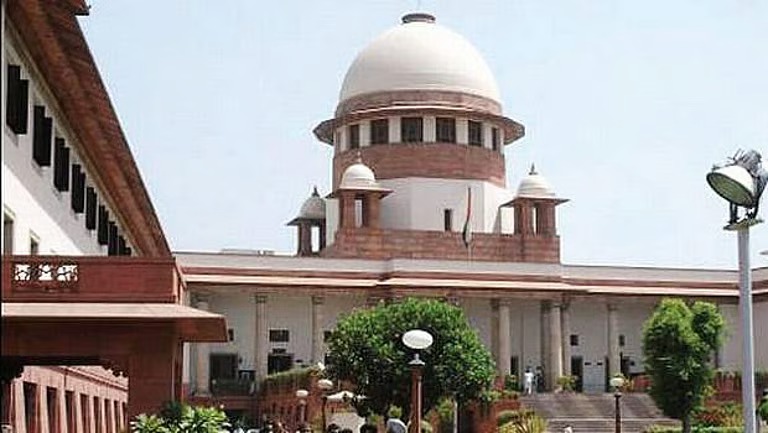
Supreme Court Upholds Madras HC Restrictions on Muslim Prayers at Thiruparankundram Hill
Apex Court Calls High Court’s Order ‘Balanced’, Limits Namaz to Ramzan and Bakrid
Judgment Affirms Ban on Animal Sacrifice, Preserves Religious Harmony at Historic Hilltop Site
By Legal Reporter
New Delhi: February 10, 2026:
In a sensitive case involving religious practices at the historic Thiruparankundram Hill in Madurai, Tamil Nadu, the Supreme Court of India has upheld the Madras High Court’s restrictions on Muslim prayers at the site. The apex court ruled that Muslims may offer prayers at the Sikkandar Badhusha Avuliya Dargah only during Ramzan and Bakrid, while affirming a ban on animal sacrifice in the area.
Also Read: Supreme Court Orders Under Scrutiny: Constitutional Remedies Against Unlawful Judgments in India
The decision, delivered by a bench of Justices Aravind Kumar and P.B. Varale, was described as “very balanced,” striking a careful compromise between the rights of different religious communities and the preservation of peace at a site that houses both a prominent Hindu temple and a revered Muslim dargah.
Background of the Case
- The dispute cantered around the Nellithoppu area of Thiruparankundram Hill, where both the Arulmigu Subramania Swamy Temple and the Sikkandar Badhusha Avuliya Dargah are located.
- In October 2025, the Madras High Court ruled that Muslim prayers could be offered only during Ramzan and Bakrid, while permitting Hindu rituals such as the lighting of the Karthigai Deepam festival lamp.
- The High Court also prohibited animal sacrifice at the site, citing concerns for public order and harmony.
- A worshipper, Imam Hussain, challenged the ruling in the Supreme Court, arguing that the restrictions violated religious freedom.
- The Supreme Court dismissed the appeal, affirming the High Court’s judgment.
Court’s Observations
The Supreme Court made several key points:
Also Read: Bombay High Court Rules: Advocates Cannot Face Criminal Liability for Mere Legal Opinions
- Balanced Approach: The High Court’s order was described as “very, very balanced,” ensuring that both communities could continue their practices without conflict.
- Limited Namaz: Muslims may offer prayers only during Ramzan and Bakrid, not daily.
- Ban on Animal Sacrifice: The prohibition was upheld to maintain peace and avoid communal tensions.
- Respect for Tradition: Hindu rituals such as Karthigai Deepam were permitted, recognizing the temple’s historic significance.
Legal Significance of the Ruling
This judgment reinforces important principles:
- Freedom of Religion vs. Public Order: Religious rights must be balanced with the need to maintain peace and harmony.
- Judicial Neutrality: Courts must act as neutral arbiters, ensuring fairness to all communities.
- Precedent for Future Cases: The ruling may guide similar disputes involving shared religious spaces across India.
Broader Implications
- For Communities: The ruling encourages coexistence by allowing limited practices while preventing conflict.
- For Governance: Authorities must ensure compliance with restrictions to avoid tensions.
- For Judiciary: Demonstrates the role of courts in balancing constitutional rights with social realities.
- For Citizens: Highlights the importance of respecting judicial orders in sensitive religious matters.
Importance of Legal Awareness
If you want practical guidance on drafting wills, codicils, and probate procedures, Will Writing Simplified is an invaluable resource. It provides clear explanations and case law references, making it essential for lawyers citizens., policymakers, and Available on Amazon and Flipkart.
Conclusion
The Supreme Court’s decision to uphold the Madras High Court’s restrictions at Thiruparankundram Hill is a landmark in balancing religious freedom with public order. By permitting limited prayers and banning animal sacrifice, the judgment ensures harmony at a site revered by both Hindus and Muslims. It sets a precedent for managing shared religious spaces across India, reinforcing the principle that constitutional rights must coexist with social peace.
Suggested Keywords for Faster Searches
- Supreme Court Thiruparankundram Hill prayers ruling
- Madras High Court restrictions Muslim prayers
- Karthigai Deepam festival SC judgment
- Ban on animal sacrifice Thiruparankundram case
- Religious freedom vs public order India
- Will Writing Simplified book legal resource
Also Read: Supreme Court Quashes Gujarat HC Order on Adani Ports Land, Remands Case for Fresh Hearing