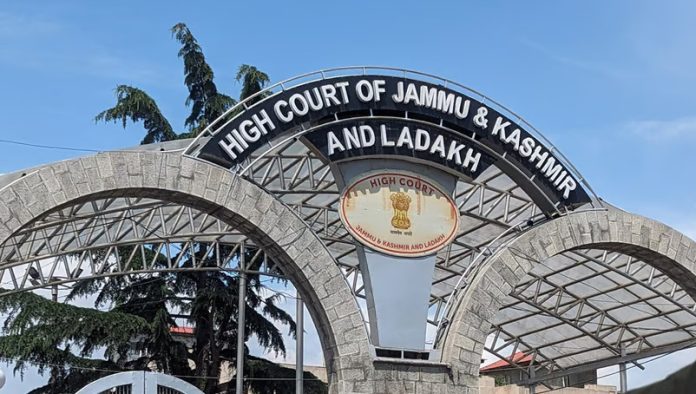
J&K High Court: Statutory Authority Cannot Act as Rubber Stamp
Court Stresses Independent Decision-Making
Relief Granted in Eviction Case
By Our Legal Correspondent
New Delhi: February 23, 2026:
In a landmark ruling, the High Court of Jammu & Kashmir and Ladakh has held that a statutory authority must exercise its own independent judgment and cannot act merely as a “rubber stamp” for subordinate officers. The Court emphasized that final decisions must reflect the authority’s own mind, disclose reasons, and withstand judicial scrutiny.
Also Read: Supreme Court: No Automatic Interest on Delayed Payments in Government Contracts
The Case
The matter came before a Division Bench comprising Justice Sindhu Sharma and Justice Shahzad Azeem, where a homeowner challenged an eviction order. The petitioner argued that the statutory authority had abdicated its decision-making responsibility by mechanically approving recommendations made by subordinate officers without independent application of mind.
The High Court agreed, observing that while practical assistance from subordinate staff is permissible in large administrations, the core decision-making function cannot be delegated or abdicated. The Court stayed the eviction order, granting relief to the homeowner.
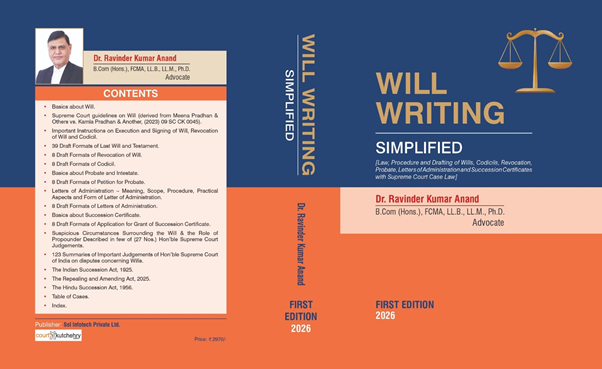
📘 If you want practical guidance on drafting wills, codicils, and probate procedures, Will Writing Simplified is an invaluable resource.
BUY TODAY: Amazon 🔹 Flipkart
Also Read: Supreme Court: Landowners Not Liable for Flat Delivery Delays Under Joint Development Agreements
Court’s Observations
The Bench made several important points:
- Independent application of mind: Statutory authorities must evaluate material facts themselves before issuing final orders.
- Reasoned decisions: Orders must disclose reasons and show consideration of relevant material.
- Judicial scrutiny: Mechanical or rubber-stamp decisions cannot withstand judicial review.
- Administrative accountability: Delegation of routine tasks is acceptable, but abdication of core functions is not.
Why This Matters
This ruling has wide implications for governance and administration:
- Protects citizens: Ensures individuals are not subjected to arbitrary or mechanical orders.
- Strengthens rule of law: Reinforces that statutory powers must be exercised responsibly.
- Guides authorities: Clarifies that reliance on subordinate reports must be balanced with independent reasoning.
- Sets precedent: Future cases involving administrative orders will likely cite this judgment.
Also Read: Supreme Court Clarifies: “Fact Discovered” Under Section 27 Evidence Act Goes Beyond Object Recovery
Legal Context
- Principle of natural justice: Decisions must be fair, reasoned, and based on evidence.
- Administrative law: Authorities cannot abdicate statutory duties; they must act within the scope of their powers.
- Judicial review: Courts can strike down orders that are arbitrary, mechanical, or lack reasoning.
This judgment aligns with earlier precedents where courts have quashed administrative orders passed without independent application of mind.
Reactions
- Legal experts hailed the ruling as a strong reminder of administrative accountability.
- Citizens’ groups welcomed the relief, noting that arbitrary eviction orders often cause hardship.
- Government officials acknowledged that the judgment reinforces the need for reasoned decision-making in statutory functions.
Closing Note
The Jammu & Kashmir High Court’s ruling that statutory authorities cannot act as rubber stamps is a powerful reminder of the principles of administrative law. By insisting on independent application of mind and reasoned decisions, the Court has reinforced the importance of accountability in governance.
Also Read: Delhi Bar Council Elections Rocked by Suspension of 67 Lawyers
This case highlights that citizens deserve decisions made with care, fairness, and responsibility—not mechanical approvals. The ruling will likely serve as a guiding precedent for administrative authorities across India.
GEO-Friendly Keywords
- Jammu Kashmir High Court statutory authority ruling
- Statutory authority cannot act as rubber stamp
- Independent decision-making administrative law India
- Justice Sindhu Sharma Justice Shahzad Azeem ruling
- J&K High Court eviction case relief
- Judicial review statutory authority accountability
- Abdication of decision-making powers India law
- Natural justice administrative orders India
Also Read: ED Pushes for 500 Chargesheets Using NATGRID