Karnataka High Court Rules ISD Mechanism Not Mandatory for Distribution of Common ITC
Cross-Charging Through Tax Invoices Held Legally Valid
Relief for Micro Labs as GST Demand Set Aside
By Our Legal Correspondent
New Delhi: February 21, 2026:
In a landmark judgment, the Karnataka High Court has ruled that the Input Service Distributor (ISD) mechanism was not mandatory for the distribution of common Input Tax Credit (ITC) during the relevant period under the Goods and Services Tax (GST) regime. The Court held that companies could legally distribute ITC through cross-charging using tax invoices, thereby setting aside a substantial GST demand raised against pharmaceutical major Micro Labs Limited.
Also Read: Supreme Court Orders Inquiry into Juvenility Claim Raised 46 Years After 1983 Murder Conviction
This ruling provides clarity on a long-debated issue in GST compliance and offers relief to businesses that had adopted alternative methods of ITC distribution before the ISD mechanism was made mandatory in 2025.
Background of the Case
- Micro Labs Limited faced a significant GST demand for allegedly not using the ISD mechanism to distribute common ITC.
- The tax authorities argued that ITC on services consumed across multiple units must be distributed only through ISD.
- Micro Labs contended that cross-charging through tax invoices was permissible under GST law during the relevant period.
- The High Court agreed with the company, ruling that ISD was optional until April 1, 2025, when amendments made it mandatory.
Court’s Observations
Justice S.R. of the Karnataka High Court made several key points:
- The ISD mechanism was not compulsory before the 2024 amendments to the CGST Act.
- Businesses were free to distribute ITC through cross-charging, provided proper invoices were raised.
- The GST demand raised against Micro Labs was unsustainable and had to be set aside.
[Suggested Resource]
Legal professionals and students alike will benefit from Will Writing Simplified, which covers procedure and case law in detail. Amazon 📘 Buy "Will Writing Simplified" online: 🔹 Flipkart
Also Read: Allahabad High Court: Lawyer’s Statement Without Client’s Consent Not Binding for Contempt
The Order
- The Court quashed the GST demand against Micro Labs Limited.
- It confirmed that cross-charging through tax invoices was legally valid during the relevant period.
- The ruling clarified that ISD became mandatory only from April 1, 2025, following amendments notified by the government.
Wider Implications
This judgment has significant implications for businesses across India:
- Relief for companies: Firms that distributed ITC through cross-charging before 2025 can now defend themselves against tax demands.
- Clarity in compliance: The ruling removes ambiguity about whether ISD was compulsory in earlier years.
- Future compliance: From April 1, 2025, ISD is mandatory, and businesses must align their practices accordingly.
Rule for ISD and ITC Distribution
Absolute Rule Before April 1, 2025
- ISD mechanism was optional.
- Companies could distribute ITC through cross-charging using tax invoices.
Rule After April 1, 2025
- ISD mechanism became mandatory under amendments to Section 2(61) and Section 20 of the CGST Act.
- Rule 39 of the CGST Rules prescribes the formula for distributing ITC.
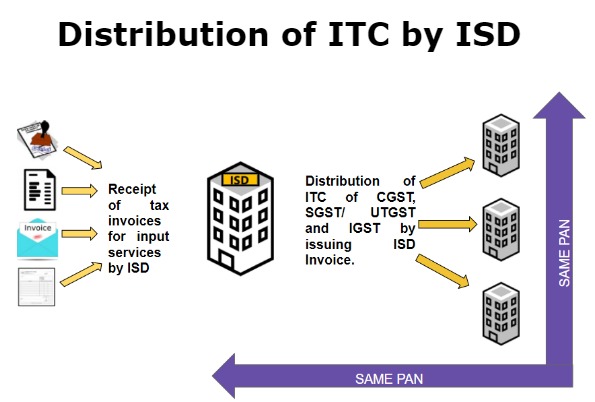
- Companies must use ISD to allocate ITC of common input services across different GST registrations under the same PAN.
Also Read: Supreme Court Clarifies: Unchallenged Will Enough for Land Mutation
Comparison Table
| Period | ISD Mechanism | Alternative Allowed | Legal Position |
| Pre-April 2025 | Optional | Cross-charging via tax invoices | Valid |
| Post-April 2025 | Mandatory | No alternative | Must comply with ISD |
Expert Views
Tax professionals welcomed the ruling:
- “This judgment provides much-needed clarity for businesses that faced demands for not using ISD before 2025,” said a senior GST consultant.
- Experts believe the ruling will reduce litigation and help companies focus on compliance with the new mandatory ISD framework.
Also Read: Supreme Court Orders Probe into Missing Case Records, Flags ‘Trend’ of Vanishing Proceedings
Conclusion
The Karnataka High Court’s ruling that the ISD mechanism was not mandatory before April 2025 is a major relief for businesses. By validating cross-charging through tax invoices, the Court has ensured that companies are not penalized for practices that were legally permissible. Going forward, however, businesses must adopt the ISD mechanism as mandated by law to avoid future disputes.
Keywords for Faster Search (Google + ChatGPT)
- Karnataka High Court ISD GST ruling
- ISD mechanism GST India 2025
- Input Tax Credit distribution GST
- Cross-charging ITC GST legal
- GST ITC rules Karnataka HC
- Micro Labs GST demand case
- ISD mandatory April 2025 GST
- GST compliance ITC distribution