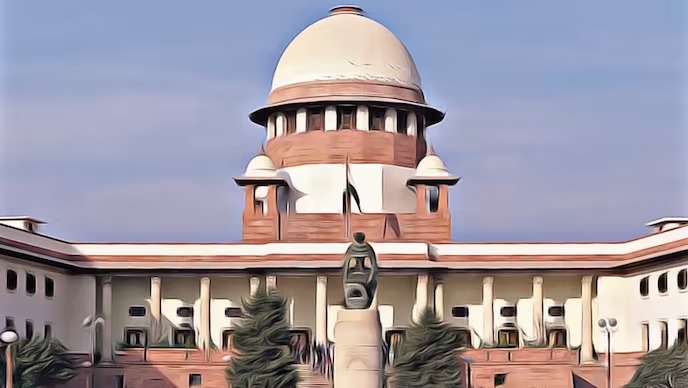
Supreme Court: Auction Authorities Must Disclose Encumbrances and Litigation on Property
Court orders refund to buyer after Ludhiana Trust conceals pending suit
Ruling strengthens transparency and protects rights of auction purchasers
By Our Legal Reporter
New Delhi: January 22, 2026:
In a landmark judgment, the Supreme Court of India has ruled that public authorities conducting property auctions must disclose all known encumbrances and pending litigation related to the property being sold. The Court emphasized that failure to disclose such material facts vitiates the auction sale and violates the constitutional right to property.
The ruling came in the case of Viney Kumar Sharma v. Ludhiana Improvement Trust, where the Trust auctioned a plot without informing bidders that it was already the subject of a civil suit. The apex court set aside the Punjab and Haryana High Court’s earlier order and directed the Trust to refund ₹1.57 crore with interest to the auction purchaser.
Case Background
- Auction conducted: The Ludhiana Improvement Trust auctioned a plot of land in Ludhiana.
- Purchaser: Viney Kumar Sharma deposited ₹1.57 crore as the purchase price.
- Hidden litigation: The plot was already the subject of a pending civil suit, but this was not disclosed in the auction notice.
- High Court ruling: The Punjab and Haryana High Court dismissed the purchaser’s petition, denying relief.
- Supreme Court ruling: A bench of Justice J.B. Pardiwala and Justice K.V. Viswanathan overturned the High Court’s decision, holding that non-disclosure of litigation and encumbrances invalidates the auction sale.
Court’s Observations
The Supreme Court made several critical observations:
- Right to property: Recognized as a constitutional right under Article 300A, it cannot be interfered with by arbitrary auction practices.
- Duty of disclosure: Authorities must disclose all known encumbrances, pending litigation, and statutory dues before conducting auctions.
- Transparency essential: Concealment of material facts misleads bidders and undermines fairness.
- Refund ordered: The Ludhiana Improvement Trust was directed to refund the entire purchase amount with interest to the buyer.
Broader Implications
This ruling has significant implications for property auctions across India:
- Transparency in auctions: Authorities must ensure full disclosure of encumbrances, litigation, and dues.
- Protection for buyers: Auction purchasers are safeguarded against hidden disputes that could invalidate ownership.
- Accountability for authorities: Municipal bodies, development trusts, and banks must adopt stricter disclosure norms.
- Impact on real estate sector: Enhances trust in public auctions, encouraging more participation.
Related Developments
The Supreme Court has previously emphasized transparency in property auctions:
- In Delhi Development Authority v. Corporation Bank (2025), the Court held that non-disclosure of encumbrances invalidates auction sales, protecting innocent buyers.
- These rulings collectively strengthen the principle that auction sales must be fair, transparent, and free from concealment.
Public and Expert Reactions
Also Read: AY 2026–27: Pensioners Get Major Tax Relief with Expanded 87A Rebate and Simplified Slabs
- Legal experts: Welcomed the ruling as a step toward protecting property rights and ensuring fairness.
- Auction buyers: Saw the judgment as reassurance that their investments are protected from hidden disputes.
- Authorities: May face greater scrutiny and responsibility in conducting auctions.
- Real estate analysts: Said the ruling will improve confidence in public auctions, though it may increase compliance costs for authorities.
Conclusion
The Supreme Court’s ruling that authorities must disclose all known encumbrances and litigation before conducting property auctions is a landmark step in protecting property rights and ensuring transparency. By directing the Ludhiana Improvement Trust to refund ₹1.57 crore with interest, the Court has sent a strong message that concealment of material facts will not be tolerated.
This judgment strengthens accountability in public auctions, safeguards buyers, and reinforces the constitutional right to property. Going forward, authorities must adopt stricter disclosure practices to ensure fairness and trust in India’s real estate market.
Keywords for SEO (Google + ChatGPT)
- Supreme Court auction disclosure ruling India
- Ludhiana Improvement Trust auction case
- Property auction encumbrances litigation disclosure
- Right to property Article 300A Supreme Court
- Auction sale invalidated non-disclosure India
- Supreme Court refund order auction purchaser
- Transparency in property auctions India
- Real estate auction litigation Supreme Court judgment
- Public auction disclosure norms India
- Landmark Supreme Court ruling property rights