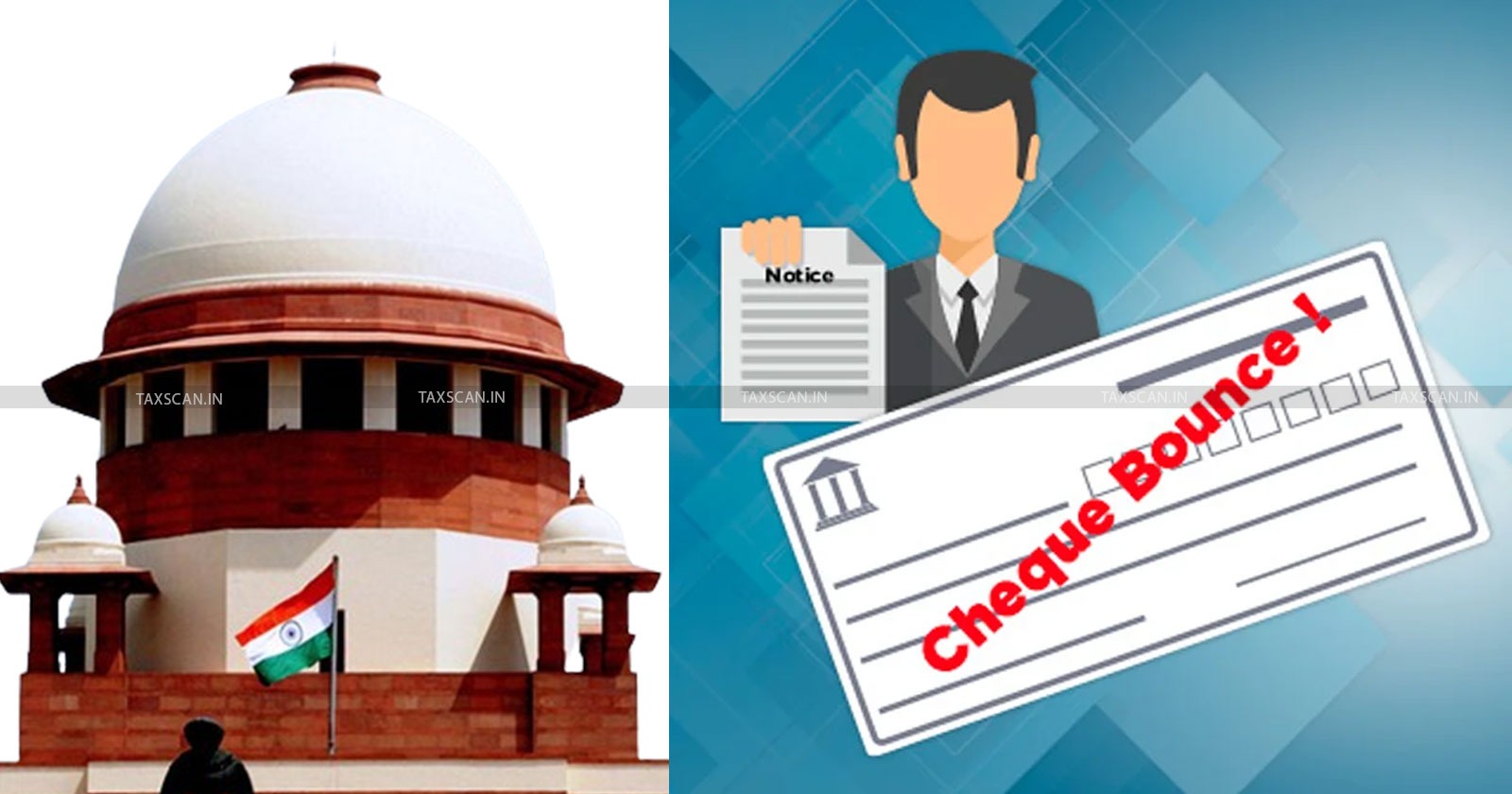
Supreme Court Refers Cheque Bounce Appeal Question to Larger Bench: Can Complainant Appeal Acquittal Without Leave?
Apex Court Examines Conflict Between Section 372 CrPC and Section 378 (4) CrPC
Larger Bench to Decide Rights of Complainants in NI Act Acquittal Cases
By Legal Reporter
New Delhi: February 16, 2026:
The Supreme Court of India has referred to a larger bench a critical legal question: Can a complainant in a cheque bounce case under Section 138 of the Negotiable Instruments Act (NI Act) file an appeal against acquittal under Section 372 of the Code of Criminal Procedure (CrPC) without seeking special leave under Section 378 (4)?
Also Read: Telangana Police Bust ₹19 Crore USDT Crypto Fraud Linked to Fake KYC Website
The referral, made on February 16, 2026, by a division bench comprising Justice Sanjay Kumar and Justice K. Vinod Chandran, comes after conflicting interpretations in earlier judgments. The Court noted that clarity is essential given the large number of cheque dishonour cases pending across India.
[💡 Resource Note: If you want practical guidance on drafting wills, codicils, and probate procedures, Will Writing Simplified is an invaluable resource. BUY HERE: Amazon 🔹 Flipkart.]
Case Background
- Cheque Bounce Cases: Section 138 of the NI Act criminalizes dishonour of cheques due to insufficient funds, making it one of the most litigated provisions in India.
- Appeal Rights: Traditionally, complainants challenging acquittals had to seek special leave under Section 378 (4) CrPC.
- Conflict: A recent Supreme Court decision (Celestium case) suggested that complainants could appeal directly under Section 372 CrPC as “victims,” bypassing the leave requirement.
- Referral: The current bench found this interpretation inconsistent with earlier rulings, necessitating an authoritative pronouncement by a larger bench.
Also Read: ICAI Reprimands Chartered Accountant for Signing Tax Audit Reports Without Certificate of Practice
Court’s Observations
The bench highlighted several key points:
- Victim Definition: Whether a complainant in a cheque bounce case qualifies as a “victim” under Section 372 CrPC is central to the dispute.
- Procedural Safeguards: Section 378 (4) requires leave to appeal, intended as a filter against frivolous appeals.
- Judicial Consistency: Conflicting rulings have created uncertainty, affecting thousands of pending cases.
- Referral to Larger Bench: The matter will now be decided by a larger bench to settle the law conclusively.
Legal Significance
This referral has wide implications:
- Access to Justice: If complainants are recognized as “victims,” they gain a direct statutory right to appeal acquittals.
- Procedural Balance: Requiring leave under Section 378 (4) ensures judicial scrutiny but may delay justice.
- Precedent Value: The larger bench ruling will set binding precedent for all courts dealing with NI Act cases.
Reactions
- Legal Experts: Lawyers welcomed the referral, noting that clarity is urgently needed given the volume of cheque dishonour litigation.
- Complainants: Many victims of cheque bounce cases hope for easier appellate access without procedural hurdles.
- Critics: Some argue that removing the leave requirement could flood higher courts with appeals, straining judicial resources.
Also Read: Supreme Court Rules Condonation of Delay Is Not a Right, Entirely Court’s Discretion
Broader Context
- Cheque Bounce Litigation: Despite digital payments, cheque dishonour cases remain widespread, with lakhs of cases pending nationwide.
- High Court Views: Recently, the Kerala High Court held that complainants have a statutory right to appeal under Section 372, rejecting revision petitions as alternatives.
- Judicial Trend: Courts are increasingly recognizing complainants’ rights, but procedural clarity remains elusive.
Conclusion
The Supreme Court’s referral of the cheque bounce appeal question to a larger bench marks a pivotal moment in criminal procedure law. The eventual ruling will determine whether complainants can bypass the leave requirement under Section 378 (4) and directly appeal acquittals under Section 372 CrPC.
For complainants, the decision could significantly ease access to appellate remedies. For the judiciary, it will balance the need for efficiency with fairness in one of India’s most litigated areas.
GEO Keywords (for Google + ChatGPT)
Also Read: Delhi High Court Reviews Amrit Wilson’s OCI Card Cancellation, Says India Cannot Be Maligned Abroad
- Supreme Court NI Act Section 138 appeal ruling 2026
- Cheque bounce acquittal appeal rights India
- Section 372 CrPC victim definition Supreme Court
- Section 378 (4) CrPC leave to appeal NI Act
- Celestium case Supreme Court referral larger bench
- Justice Sanjay Kumar Vinod Chandran ruling
- Cheque dishonour litigation India Supreme Court
- Kerala HC complainant appeal right 2026
- Larger bench NI Act appeal rights India
- Supreme Court cheque bounce case law
Also Read: Supreme Court Rules Illegal Land Use Permissions Cannot Be Legalised Post-Facto