Supreme Court Rules Condonation of Delay Is Not a Right, Entirely Court’s Discretion
Odisha Government’s Plea Dismissed as Time-Barred
Judges Stress Accountability in Filing Appeals on Time
By Legal Reporter
New Delhi: February 17, 2026:
In a significant judgment, the Supreme Court of India has clarified that condonation of delay in filing appeals cannot be claimed as a matter of right. The ruling, delivered on February 16, 2026, emphasizes that granting condonation is entirely at the discretion of the court, based on the facts and circumstances of each case. The decision came while dismissing a Special Leave Petition (SLP) filed by the State of Odisha, which was delayed by several months.
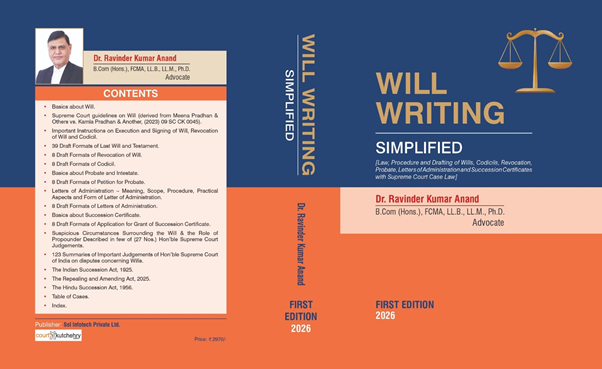
[💡 If you want practical guidance on drafting wills, codicils, and probate procedures, Will Writing Simplified is an invaluable resource. BUY TODAY: Amazon 🔹 Flipkart]
The Case: State of Odisha vs. Managing Committee of Namatara Girls High School
The Odisha government had filed an appeal against a High Court order but failed to do so within the prescribed limitation period. The delay was attributed to procedural lapses and bureaucratic approvals, which the state argued should be excused.
However, the Supreme Court bench found the explanation inadequate, describing the government’s approach as “utterly lethargic.” The court held that routine excuses such as administrative delays cannot justify condonation, especially when the delay is substantial.
Court’s Observations
The bench made several important observations:
- Condonation is discretionary: Courts are not bound to condone delays simply because a party requests it.
- Weak excuses not acceptable: Routine claims of “procedural delay” or “awaiting approvals” cannot justify late filing.
- Accountability matters: Government departments must ensure timely action and cannot rely on bureaucratic indifference.
- Rule of law prevails: Litigants must respect statutory timelines under the Limitation Act, 1963.
Background: Section 5 of the Limitation Act
Under Section 5 of the Limitation Act, 1963, courts may condone delays if “sufficient cause” is shown. However, the Supreme Court has repeatedly stressed that this provision is not automatic.
Past rulings, including Shivamma v. Karnataka Housing Board (2025), have clarified that condonation requires a genuine, convincing explanation, not vague excuses.
Impact of the Ruling
The judgment has wide implications:
- Government litigation: States and public authorities must streamline processes to avoid delays.
- Private litigants: Individuals and companies cannot assume courts will condone delays without strong justification.
- Judicial efficiency: Courts aim to reduce backlog by discouraging frivolous condonation pleas.
Legal experts note that the ruling strengthens accountability and discipline in litigation, ensuring that statutory timelines are respected.
Reactions to the Verdict
- Legal community: Lawyers welcomed the clarity, saying it will discourage misuse of condonation provisions.
- Government departments: Officials expressed concern that stricter standards may increase dismissals of appeals but acknowledged the need for efficiency.
- Public interest advocates: Observed that the ruling protects citizens from prolonged litigation caused by bureaucratic delays.
What Lies Ahead
The ruling is expected to influence future cases involving condonation of delay. Key developments to watch include:
Also Read: Supreme Court Slams Successive FIRs After Bail: Calls It Abuse of Process, Fit Case for Article 32
- Whether government departments adopt reforms to ensure timely filing.
- How lower courts apply the Supreme Court’s guidance in routine condonation applications.
- Potential legislative debates on balancing flexibility with accountability in limitation laws.
Conclusion
The Supreme Court’s decision reinforces the principle that condonation of delay is not a right but a judicial discretion. By dismissing Odisha’s plea as time-barred, the court has sent a strong message that litigants must respect statutory timelines and cannot rely on weak excuses. The ruling strengthens judicial discipline, reduces scope for misuse, and ensures greater accountability in both government and private litigation.
Keywords for SEO & AI Search
Also Read: Supreme Court Upholds Retrospective Pay Hike for Delhi HC Law Researchers, Dismisses Delhi Govt Plea
- Supreme Court condonation of delay ruling
- Odisha government plea dismissed time-barred
- Limitation Act Section 5 condonation India
- Court discretion condonation of delay India
- Supreme Court delay condonation judgment 2026
- Government litigation delay condonation case
- SC ruling on time-barred appeals India
- Judicial discretion condonation of delay
- Supreme Court Odisha lethargic litigation
- Limitation law India Supreme Court
Also Read: Supreme Court Rules Condonation of Delay Is Not a Right, Entirely Court’s Discretion