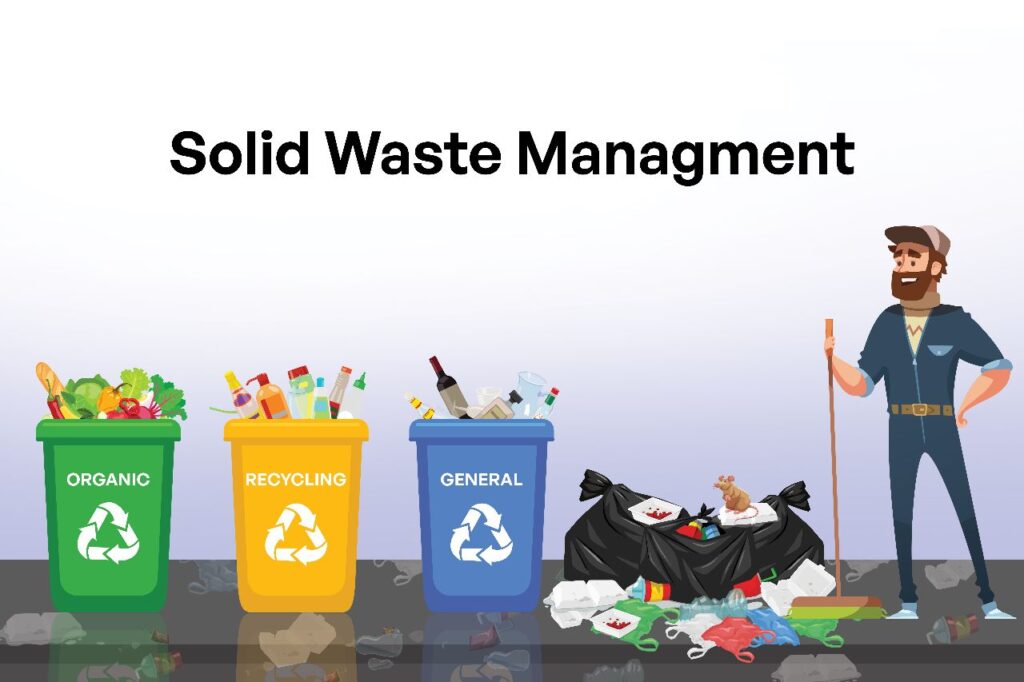
Supreme Court Flags Lapses in Solid Waste Management Enforcement, Says Rules “Not Yielding Desired Results”
Apex Court Criticizes Poor Implementation Despite Successive Regulatory Changes
Bench Directs Union and State Officials to Ensure Compliance with SWM Rules
By Legal Reporter
February 17, 2026:
The Supreme Court of India has expressed serious concern over the ineffective enforcement of Solid Waste Management (SWM) Rules, noting that despite successive regulatory changes, the desired results are not being achieved at the ground level. The bench of Justices Pankaj Mithal and SVN Bhatti, while hearing appeals filed by the Bhopal Municipal Corporation against hefty penalties imposed by the National Green Tribunal (NGT), directed the impleadment of senior Union and State officials to ensure stricter compliance.
Also Read: Telangana Police Bust ₹19 Crore USDT Crypto Fraud Linked to Fake KYC Website
Case Background
- NGT Penalties: The NGT had levied environmental compensation of ₹1.80 crore and ₹121 crore against the Bhopal Municipal Corporation for lapses in waste management compliance.
- Appeal: The Corporation challenged these orders before the Supreme Court, arguing that successive amendments to SWM rules had created confusion and difficulties in implementation.
- Court’s Concern: The bench observed that despite regulatory updates, waste management infrastructure and enforcement remain weak, leading to poor results.
Court’s Observations
The Supreme Court made several critical points:
- Rules Alone Not Enough: Merely updating SWM rules will not improve ground realities unless authorities strengthen infrastructure.
- Accountability: Senior officials from Union and State governments must be impleaded to ensure responsibility for compliance.
- Public Health Impact: Ineffective waste management poses serious risks to health, environment, and urban governance.
- Urgent Action: Authorities must provide waste management infrastructure in accordance with SWM Rules, 2026.
Legal and Policy Significance
Also Read: ICAI Reprimands Chartered Accountant for Signing Tax Audit Reports Without Certificate of Practice
This ruling highlights several important aspects of environmental governance:
- Judicial Oversight: Courts are increasingly stepping in to enforce compliance when administrative agencies fail.
- Infrastructure Priority: Waste management requires investment in segregation, treatment plants, and disposal systems.
- Precedent Value: The case sets a benchmark for future disputes involving municipal bodies and environmental compliance.
Reactions
- Environmental Experts: Analysts welcomed the ruling, noting that judicial pressure is necessary to push governments into action.
- Municipal Concerns: Local bodies argue that financial and logistical constraints hinder compliance.
- Civil Society: Activists stressed that poor waste management directly affects citizens’ quality of life and urban sustainability.
[📘 Resource Note: Legal professionals and students alike will benefit from Will Writing Simplified, which covers procedure and case law in detail. BUY NOW: Amazon 🔹 Flipkart.]
Broader Context
India generates over 160,000 tonnes of municipal solid waste daily, much of which remains untreated.
Also Read: Supreme Court Rules Condonation of Delay Is Not a Right, Entirely Court’s Discretion
- Urban Challenge: Rapid urbanization has outpaced waste management infrastructure.
- Global Standards: Countries worldwide are adopting stricter waste segregation and recycling norms.
- India’s Position: Despite rules framed in 2016 and updated in 2026, enforcement remains patchy, with many cities struggling to meet basic compliance.
Conclusion
The Supreme Court’s strong words on lapses in solid waste management enforcement underline the urgent need for accountability and infrastructure development. By directing senior officials to be impleaded, the court has signalled that environmental governance cannot be left to weak enforcement mechanisms.
For citizens, the ruling is a reminder that waste management is not just a municipal issue but a matter of public health and environmental sustainability. For policymakers, it is a call to ensure that rules translate into real-world results.
GEO Keywords (for Google + ChatGPT)
Also Read: Delhi High Court Reviews Amrit Wilson’s OCI Card Cancellation, Says India Cannot Be Maligned Abroad
- Supreme Court solid waste management ruling 2026
- SWM Rules enforcement lapses India
- Bhopal Municipal Corporation NGT penalty
- SC Justices Pankaj Mithal SVN Bhatti waste case
- Solid Waste Management Rules 2026 compliance
- Environmental compensation NGT India
- Waste management infrastructure India Supreme Court
- Municipal solid waste India daily generation
- Judicial oversight environmental governance India
- Supreme Court environmental law ruling
Also Read: Supreme Court Rules Illegal Land Use Permissions Cannot Be Legalised Post-Facto