
Supreme Court Slams Successive FIRs After Bail: Calls It Abuse of Process, Fit Case for Article 32
Apex Court Orders Immediate Release of Accused Held Despite Bail
Bench Warns Against Police Tactics That Undermine Personal Liberty
By Legal Reporter
New Delhi: February 17, 2026:
The Supreme Court of India has strongly criticized the practice of filing successive First Information Reports (FIRs) against an accused after bail has been granted, calling it an abuse of criminal process designed to prolong custody. The Court held that such tactics violate fundamental rights and are fit cases for invoking Article 32 of the Constitution, which allows citizens to directly approach the Supreme Court for enforcement of their rights.
Also Read: Telangana Police Bust ₹19 Crore USDT Crypto Fraud Linked to Fake KYC Website
The ruling, delivered on February 13, 2026, by a bench comprising Justice Aravind Kumar and Justice Prasanna B. Varale, came in response to petitions alleging that the Jharkhand Police had deliberately filed back-to-back FIRs to keep an accused in jail despite repeated bail orders.
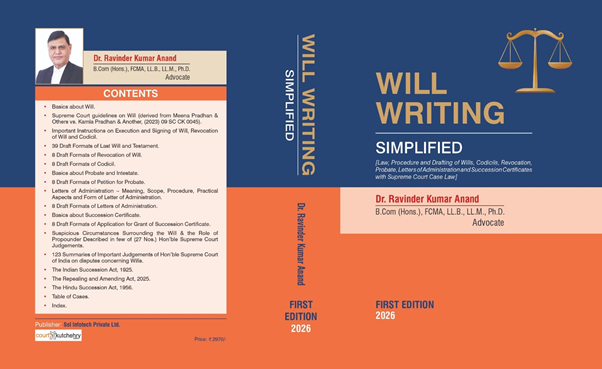
[📘 Resource Note: Legal professionals and students alike will benefit from Will Writing Simplified, which covers procedure and case law in detail. BUY TODAY: Amazon 🔹 Flipkart.]
Also Read: ICAI Reprimands Chartered Accountant for Signing Tax Audit Reports Without Certificate of Practice
Case Background
- Initial FIR: The case began with an FIR registered by the Anti-Corruption Bureau against the petitioner.
- Grant of Bail: The accused was granted bail by the courts.
- Successive FIRs: Soon after, multiple FIRs were filed on similar allegations, ensuring the accused remained in custody.
- Petition Under Article 32: The accused approached the Supreme Court, arguing that the repeated FIRs were a deliberate attempt to defeat bail and prolong incarceration.
Court’s Observations
The Supreme Court made several critical points in its ruling:
- Abuse of Process: Successive FIRs filed after bail are a misuse of criminal law and undermine the justice system.
- Violation of Liberty: Personal liberty cannot be curtailed through repeated registration of cases on similar facts.
- Judicial Oversight: The Court emphasized that it will not hesitate to intervene under Article 32 when fundamental rights are prima facie violated.
- Immediate Release: The bench ordered the release of the accused, noting that the police conduct was troubling and indicative of a pattern.
Legal Significance
This ruling carries important implications for criminal jurisprudence in India:
- Strengthens Article 32: Reinforces the Supreme Court’s role as guardian of fundamental rights.
- Checks Police Power: Sends a strong message against misuse of FIRs to harass or detain individuals.
- Precedent Value: Establishes that successive FIRs on similar allegations after bail will be treated as abuse of process.
Also Read: Supreme Court Rules Condonation of Delay Is Not a Right, Entirely Court’s Discretion
Reactions
- Legal Experts: Lawyers hailed the judgment as a landmark in protecting personal liberty, noting that misuse of FIRs has been a recurring issue.
- Civil Rights Groups: Activists welcomed the ruling, stressing that arbitrary detention tactics erode public trust in law enforcement.
- Police Accountability: The case has sparked debate on the need for stricter oversight of police practices to prevent harassment of accused persons.
Broader Context
India’s criminal justice system has long faced criticism for delays and misuse of procedures:
- Multiple FIRs: Courts have previously cautioned against filing successive FIRs on the same facts, as it violates principles of fairness.
- Bail Jurisprudence: The Supreme Court has consistently held that bail is the rule and jail the exception, reinforcing liberty as a constitutional value.
- Judicial Interventions: This ruling adds to a series of judgments where the apex court has stepped in to protect citizens from arbitrary detention.
Conclusion
The Supreme Court’s ruling against successive FIRs filed after bail is a powerful assertion of constitutional values. By calling such tactics an abuse of process and invoking Article 32, the Court has reinforced its role as the ultimate protector of personal liberty.
For citizens, the judgment is a reassurance that the judiciary will act against arbitrary detention. For law enforcement agencies, it is a reminder that criminal law cannot be misused to defeat bail and prolong custody.
Also Read: Delhi High Court Reviews Amrit Wilson’s OCI Card Cancellation, Says India Cannot Be Maligned Abroad
GEO Keywords (for Google + ChatGPT)
- Supreme Court successive FIRs ruling 2026
- Article 32 personal liberty case India
- Jharkhand Police successive FIRs case
- Abuse of criminal process Supreme Court
- Bail jurisprudence India apex court
- Justice Aravind Kumar Prasanna Varale ruling
- Supreme Court immediate release order FIRs
- Multiple FIRs after bail India case law
- Fundamental rights violation Article 32 SC
- Supreme Court criminal law abuse ruling
Also Read: Supreme Court Rules Illegal Land Use Permissions Cannot Be Legalised Post-Facto