
Supreme Court Declares Reassessment Notices Beyond Six-Year Limit Invalid
Apex court upholds Delhi High Court ruling in tax dispute
Judgment strengthens taxpayer protection against time-barred reassessments
By Legal Reporter
New Delhi: February 11, 2026:
In a landmark ruling, the Supreme Court of India has upheld the Delhi High Court’s decision that reassessment notices issued beyond the six-year limitation period under the Income Tax Act are invalid. The judgment, delivered in February 2026, clarifies the scope of reassessment powers under Section 148 and Section 149 of the Act, ensuring that taxpayers are not subjected to endless scrutiny for past assessment years.
Also Read: Kerala’s First Visually Challenged Woman Judge Marks Breakthrough in Disability Rights
Case Background
- The dispute arose from reassessment proceedings initiated for Assessment Year (AY) 2014–15.
- The Income Tax Department issued a notice under Section 148 on August 30, 2024, along with prior notices under Section 148A(b) and orders under Section 148A(d).
- The taxpayer challenged the notices, arguing that they were barred by limitation since the six-year period had already expired under the old regime.
- The Delhi High Court agreed, quashing the reassessment proceedings.
The matter reached the Supreme Court, which upheld the High Court’s ruling, citing earlier precedents including Union of India v. Rajeev Bansal and Abhisar Buildwell Pvt. Ltd.
Supreme Court’s Observations
Also Read: Calcutta High Court: Partition Decree Executable Only After Stamp Duty Payment
The Court made several important points:
- Limitation Period: Reassessment notices cannot be issued beyond six years under the old regime, even if the new regime under the Finance Act, 2021 is in place.
- No Retrospective Extension: The new provisions cannot revive time-barred cases from earlier assessment years.
- Taxpayer Protection: The ruling ensures that taxpayers are not harassed with reassessment notices for years that have already attained finality.
- Consistency with Precedents: The Court relied on its earlier interpretation of Section 149(1)(b), which restricts reassessment powers.
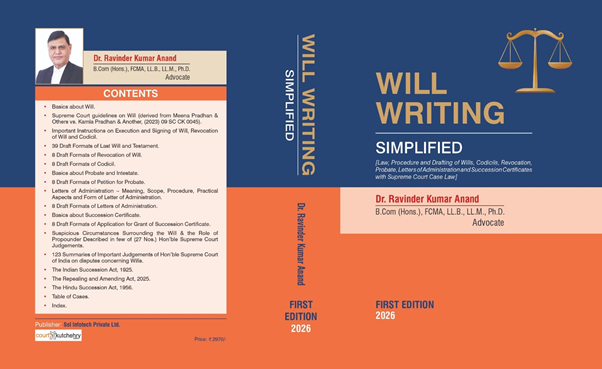
[📘Legal professionals and students alike will benefit from Will Writing Simplified, which covers procedure and case law in detail.]
🔹 Buy online: Amazon | Flipkart
Why This Matters
Also Read: Punjab & Haryana High Court Slams Misuse of Contempt Law, Imposes ₹3 Lakh Cost
This judgment is a major victory for taxpayers and has wide implications:
- It prevents the Income Tax Department from reopening assessments indefinitely.
- It strengthens the principle of finality in tax assessments.
- It provides clarity on the interplay between the old regime and the new reassessment provisions introduced in 2021.
Tax experts believe this ruling will reduce litigation and bring certainty to tax administration.
Broader Legal Context
- Section 148: Governs issuance of reassessment notices.
- Section 149: Specifies the time limits for reassessment.
- Finance Act, 2021: Introduced a new regime for reassessment, but did not extend limitation retrospectively.
- COVID-19 Relaxation Laws (TOLA): Temporarily extended deadlines but did not override statutory limitation periods.
This judgment aligns with the principle that tax laws must be applied fairly and within statutory limits.
Expert Opinions
- Chartered accountants say the ruling will provide relief to businesses facing old reassessment notices.
- Tax lawyers emphasize that the decision reinforces the importance of limitation periods in protecting taxpayer rights.
- Policy analysts note that the judgment will encourage better compliance and reduce arbitrary reopening of assessments.
Also Read: CCPA Orders Barbeque Nation to Stop Levelling Mandatory Service Charges
Impact on Businesses and Individuals
The ruling has far-reaching consequences:
- Businesses: Can plan finances with greater certainty, knowing that assessments cannot be reopened beyond six years.
- Individuals: Gain protection against harassment from tax authorities for old assessment years.
- Tax Administration: Encouraged to focus on timely and efficient assessments rather than prolonged litigation.
Conclusion
The Supreme Court’s decision to invalidate reassessment notices beyond six years marks a turning point in Indian tax law. By upholding the Delhi High Court’s ruling, the apex court has reinforced the principle of finality and fairness in taxation.
This judgment will serve as a guiding precedent for future reassessment disputes, ensuring that taxpayers are shielded from arbitrary and time-barred actions by the tax authorities.
Keywords for Faster Searches
- Supreme Court India reassessment notices
- Six-year limitation income tax
- Delhi High Court tax ruling
- Section 148 reassessment India
- Section 149 limitation period tax law
- Finance Act 2021 reassessment provisions
- Landmark SC judgment tax disputes
Also Read: Delhi High Court Slams Advocate for Misleading Family Court into Granting Divorce in Void Marriage