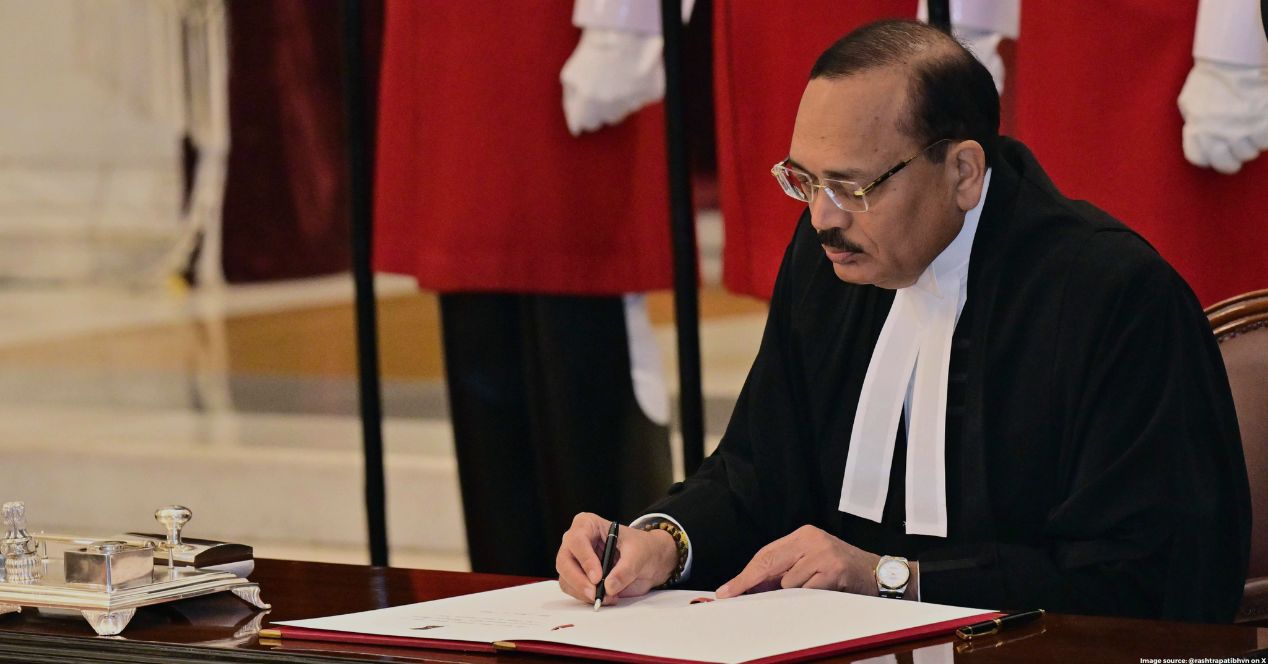
CJI Surya Kant Warns Against Sweeping Judicial Orders Without Ground-Level Impact Assessment
Supreme Court acknowledges risk of passing broad rulings without considering social realities.
Debate reignited over sedition law and preliminary police inquiries before FIR registration.
By Legal Reporter
New Delhi: February 28, 2026:
In a rare moment of introspection, Chief Justice of India (CJI) Surya Kant recently observed that the Supreme Court often passes sweeping orders without fully realizing their impact on the ground. His remarks came during hearings on petitions challenging provisions of the Bharatiya Nyaya Sanhita (BNS) and the Bharatiya Nagarik Suraksha Sanhita (BNSS), particularly those related to sedition and preliminary police inquiries before registering a First Information Report (FIR). The statement has sparked widespread debate about judicial accountability, the balance between law and social realities, and the need for cautious reform.
Also Read: CJI Surya Kant Vows Registry Reforms After Shocking Plea Resurfacing
Background: The Case in Question
- Sedition Law Challenge: Petitioners argued that the sedition provision in the new BNS continues to threaten free speech and dissent, despite earlier promises of reform.
- BNSS Provision: A clause allowing police to conduct preliminary inquiries before registering an FIR was contested. Senior advocate Menaka Guruswamy pointed out that this violates the Supreme Court’s landmark 2014 Lalita Kumari judgment, which mandated immediate FIR registration if a cognizable offence is disclosed.
Why the CJI’s Remarks Matter
- Judicial Introspection: Rarely do judges publicly admit that their rulings may not align with ground realities.
- Impact on Citizens: Sweeping orders can unintentionally disrupt social fabric, especially when applied uniformly across diverse contexts.
- Balance of Power: The judiciary’s role in shaping governance must be tempered with awareness of practical consequences.
Key Issues Raised
- Sedition Law
- Critics argue it curtails free speech.
- Government insists it is necessary for national security.
- Courts face the challenge of balancing liberty with order.
- Preliminary Police Inquiries
- Seen to filter frivolous complaints.
- Opponents fear it delays justice and gives police excessive discretion.
- Lalita Kumari ruling emphasized prompt FIRs to protect victims’ rights.
Also Read: Supreme Court Slams Tribunals as Liability, Calls Them Government’s Headache
Wider Judicial Concerns
CJI Surya Kant’s comments also tie into broader concerns about judicial functioning:
- Registry Reforms: He recently criticized the Supreme Court’s registry for allowing similar petitions to reach different benches despite prior dismissals.
- Administrative Accountability: He pledged deeper reforms to ensure consistency and efficiency in case management.
- Public Trust: Transparency and sensitivity to ground realities are crucial for maintaining faith in the judiciary.
[Resource Note]
If you want practical guidance on drafting wills, codicils, and probate procedures, Will Writing Simplified is an invaluable resource. BUY NOW: Amazon 🔹 Flipkart
Expert Opinions
Legal scholars and senior advocates have welcomed the CJI’s candour. They argue that:
- Judicial orders must be context sensitive.
- Courts should consult ground-level data before issuing sweeping rulings.
- Reforms in registry and case management are essential to prevent duplication and confusion.
Impact on Citizens
Also Read: IRDAI Plans Sweeping Reforms to Cut Insurance Costs in India
- Positive: Greater awareness in judiciary about real-world consequences.
- Negative: Continued uncertainty over sedition and FIR procedures until final rulings are made.
- Neutral: Citizens await clarity, but the debate itself signals progress toward reform.
Conclusion
The CJI’s remarks highlight a critical tension in India’s judicial system: the need to uphold constitutional principles while ensuring that rulings do not inadvertently harm social realities. As debates over sedition and FIR procedures continue, the judiciary’s willingness to reflect on its own role marks a significant step toward more balanced and effective justice.
Keywords for Faster Searches
- CJI Surya Kant sweeping orders
- Supreme Court sedition law India
- BNSS preliminary inquiry FIR
- Lalita Kumari judgment FIR
- Judicial introspection India 2026
- Supreme Court registry reforms
- Impact of sweeping judicial orders
- Sedition law challenge Supreme Court
- Police FIR inquiry BNSS
Also Read: DGCA Introduces 48-Hour Free Cancellation Rule, Tightens Airline Refund Deadlines