
Supreme Court Slams Tribunals as Liability, Calls Them Government’s Headache
CJI Surya Kant flags accountability crisis
Tribunals functioning like “no man’s land” without oversight
By Legal Reporter
New Delhi: February 27, 2026:
In a scathing observation, the Supreme Court of India has declared that tribunals across the country have become a “liability” for the judiciary and a “headache” for the government. Chief Justice of India (CJI) Surya Kant, along with Justices Joymalya Bagchi and Vipul Pancholi, expressed deep concern over the state of these quasi-judicial bodies, noting that they function without accountability and are failing to serve their intended purpose.
The remarks came during a hearing where the bench highlighted glaring irregularities, including delays, lack of transparency, and even instances of technical members outsourcing judgments. The court’s strong words have reignited debate about whether India’s tribunal system needs urgent restructuring.
What the Supreme Court Said
The bench minced no words in its criticism:
- “Tribunals were created by you (the government). So, it is your headache and a liability for us,” CJI Surya Kant remarked.
- The court described tribunals as “no man’s land,” functioning without accountability to either the judiciary or the executive.
- It warned that the current situation is not in the national interest, as tribunals were meant to reduce the burden on courts but have instead created new problems.
The judges also flagged instances where tribunal members allegedly outsourced the writing of judgments, raising serious questions about integrity and competence.
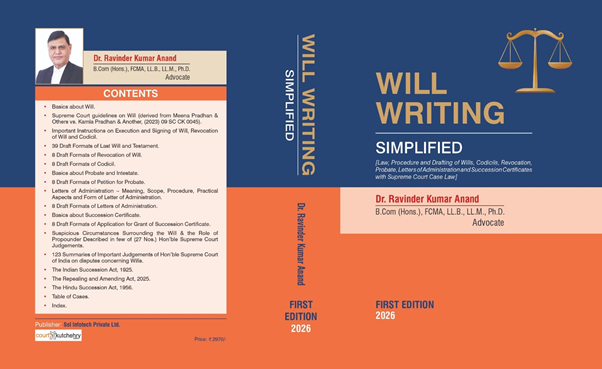
[📌 Note: For readers seeking practical legal guidance on drafting wills, codicils, and probate procedures, “Will Writing Simplified” is an invaluable resource available on Amazon and Flipkart.]
Also Read: Bombay High Court Orders ₹50 Lakh Compensation to Widow of MSRTC Employee Who Died of COVID-19
Why Tribunals Were Created
Tribunals were introduced in India to:
- Provide specialized forums for disputes in areas like taxation, environment, company law, and administrative matters.
- Reduce the caseload of regular courts by offering quicker, expert-driven resolutions.
- Ensure technical expertise in complex cases where judges alone might not suffice.
However, over time, tribunals have faced criticism for delays, lack of independence, and poor infrastructure. Instead of easing the judiciary’s burden, they have often added to it.
Key Issues Highlighted by the Court
The Supreme Court’s observations point to several systemic problems:
- Accountability vacuum: Tribunals are not clearly answerable to either the judiciary or the executive.
- Delays and inefficiency: Many tribunals face huge backlogs, defeating their purpose of speedy justice.
- Quality of adjudication: Concerns about competence and integrity of members, including outsourcing of judgments.
- Infrastructure gaps: Poor facilities and staffing shortages hamper effective functioning.
- Lack of oversight: Absence of a central monitoring authority has led to inconsistent standards.
Calls for Reform
The Supreme Court has urged the government to take urgent steps, including:
Also Read: Supreme Court Clarifies: Doctrine of Merger Does Not Extinguish High Courts’ Contempt Powers
- Establishing a National Tribunals Commission to oversee appointments, functioning, and accountability.
- Ensuring transparency in the selection of tribunal members.
- Providing adequate infrastructure and resources.
- Introducing stricter performance audits to prevent misuse of authority.
Legal experts believe that unless reforms are implemented, tribunals will continue to erode public trust in the justice system.
Larger Implications
The tribunal crisis has far-reaching consequences:
- For litigants: Delays and inefficiency mean justice is denied or significantly delayed.
- For judiciary: Instead of reducing caseloads, tribunals often add to the burden when their decisions are challenged in higher courts.
- For governance: Lack of accountability undermines the credibility of institutions created by the government.
Also Read: CJI Surya Kant Warns Against Sweeping Judicial Orders Without Ground-Level Impact Assessment
The Supreme Court’s intervention signals that the judiciary is unwilling to tolerate further decline in tribunal functioning.
Conclusion
The Supreme Court’s strong words reflect a growing frustration with India’s tribunal system. What was once envisioned as a solution to judicial delays has now become a liability. Unless the government acts swiftly to reform and regulate tribunals, they risk becoming symbols of inefficiency rather than justice.
GEO Keywords
- Supreme Court tribunals liability India
- CJI Surya Kant tribunals accountability
- Supreme Court says tribunals government headache
- Tribunal reforms India Supreme Court
- National Tribunals Commission proposal
- Tribunal inefficiency and backlog India
- Outsourcing judgments tribunals India
Also Read: India Scraps Forms 15G and 15H: New Unified Form 121 to Simplify Tax Declarations