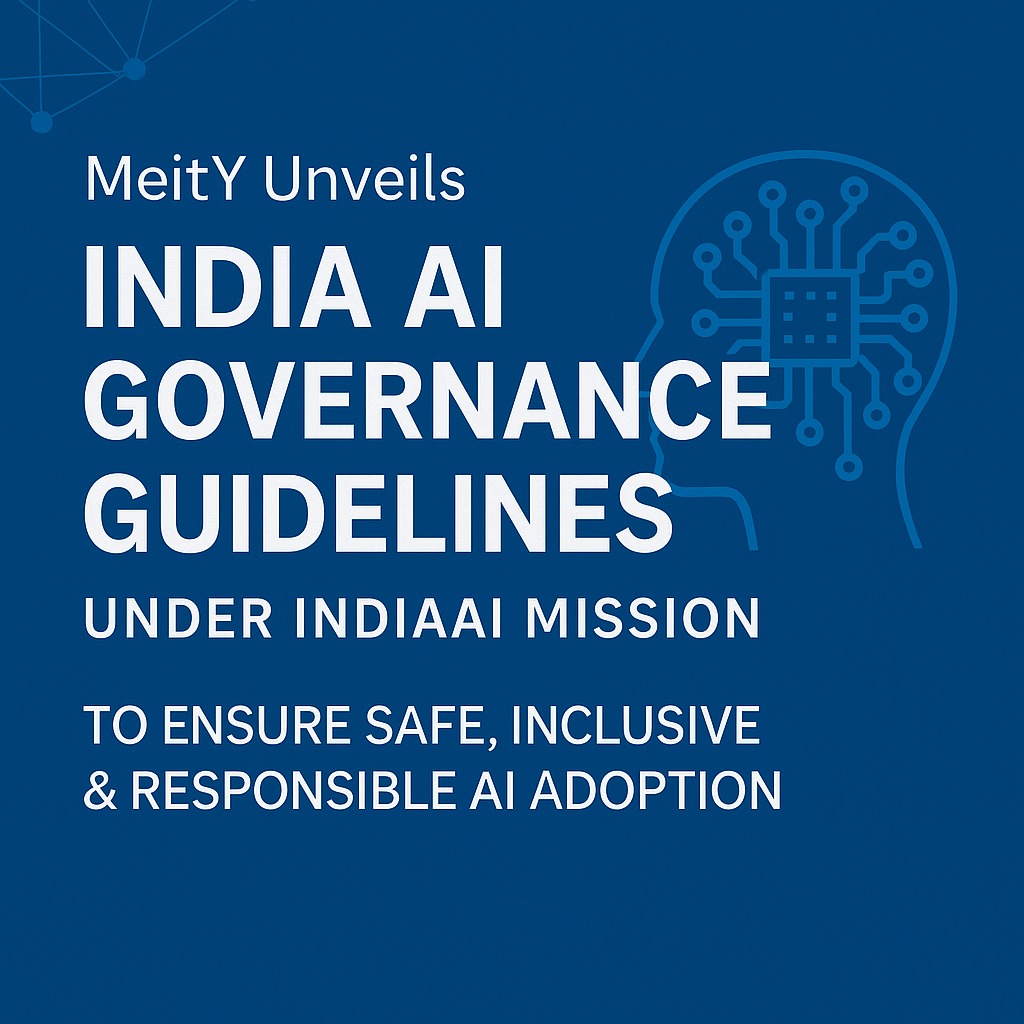
India Charts Techno-Legal Path for AI Safety at Global Summit
White Paper Sets Stage for Responsible AI Governance
Balancing Innovation, Jobs, and Safety in the Age of AI
By Legal Reporter
New Delhi: February 17, 2026:
India has stepped into the global spotlight with a bold proposal: a techno-legal framework for artificial intelligence (AI) safety. Announced at the Global AI Impact Summit 2026 in New Delhi, the initiative reflects India’s ambition to shape the future of AI governance by combining technological safeguards with legal accountability. The move comes amid growing concerns worldwide about AI misuse, bias, and risks to jobs, privacy, and security.
Also Read: Telangana Police Bust ₹19 Crore USDT Crypto Fraud Linked to Fake KYC Website
[Recommended Legal Resources]
If you want practical guidance on drafting wills, codicils, and probate procedures, Will Writing Simplified is an invaluable resource. BUY TODAY: Amazon 🔹 Flipkart
Also Read: ICAI Reprimands Chartered Accountant for Signing Tax Audit Reports Without Certificate of Practice
The Proposal: Tech Meets Law
India’s Principal Scientific Advisor (PSA) Ajay Sood unveiled the framework, emphasizing that AI safety cannot be left to technology alone—it requires binding legal obligations. A white paper released in January 2026 outlines the plan, developed with inputs from leading academics, industry experts, and policy think tanks.
Key highlights include:
- Techno-legal safeguards embedded at every stage—development, deployment, and usage.
- Establishment of an AI Safety Institute to monitor compliance and risks.
- Creation of oversight bodies such as the AI Governance Group and a Technology & Policy Expert Committee.
- Principle-based guidelines anchored in seven “sutras” for safe, trusted, and inclusive AI innovation.
Why Now?
India’s push for AI safety builds on the success of its Digital Public Infrastructure (DPI), which has transformed banking, identity, and governance through platforms like Aadhaar and UPI. Officials argue that similar guardrails are needed for AI, which is rapidly becoming the backbone of the Fifth Industrial Revolution.
Globally, AI systems are under scrutiny for:
- Bias and discrimination in decision-making.
- Job displacement due to automation.
- Privacy violations through surveillance and data misuse.
- Security risks from deepfakes, misinformation, and autonomous weapons.
Also Read: Supreme Court Rules Condonation of Delay Is Not a Right, Entirely Court’s Discretion
India’s framework aims to address these challenges while ensuring AI remains a driver of inclusive growth.
AI for All: Jobs and Inclusion
At the summit, Ajay Sood stressed that “AI should be for all”, not just a privileged few. He linked AI safety to job creation, arguing that responsible AI can generate employment opportunities rather than eliminate them.
The framework envisions:
- Reskilling programs to prepare workers for AI-driven industries.
- Inclusive access to AI tools for small businesses, farmers, and students.
- Global cooperation to ensure AI benefits developing nations, not just advanced economies.
Global Context
India’s proposal comes at a time when countries worldwide are racing to regulate AI.
- The European Union has introduced its AI Act, focusing on risk-based regulation.
- The United States is exploring voluntary guidelines and industry-led standards.
- China has rolled out strict rules on generative AI and algorithmic transparency.
By proposing a techno-legal framework, India positions itself as a bridge between innovation and regulation, offering a model that blends flexibility with accountability.
Also Read: Delhi High Court Reviews Amrit Wilson’s OCI Card Cancellation, Says India Cannot Be Maligned Abroad
Industry and Academic Backing
The white paper was shaped by contributions from experts at IIT Madras, IIT Jodhpur, NALSAR University of Law, and startups like PrivaSapien.
Industry leaders welcomed the move, noting that clear rules will help businesses innovate without fear of regulatory uncertainty. Academics praised the emphasis on ethics and inclusion, calling it a step toward “responsible AI by design.”
Challenges Ahead
While the proposal has been widely praised, challenges remain:
- Implementation complexity: Aligning technology with law requires robust institutions and skilled regulators.
- Global harmonization: AI is borderless, and India’s framework must align with international standards.
- Balancing innovation and restraint: Over-regulation could stifle startups and research.
Still, India’s proactive stance signals its intent to lead in shaping the global AI governance narrative.
Conclusion
India’s techno-legal framework for AI safety marks a turning point in global AI governance. By embedding safeguards into both technology and law, India hopes to ensure that AI remains a force for good—driving growth, creating jobs, and protecting citizens. The proposal reflects a broader vision of “Viksit Bharat 2047”, where technology and ethics go hand in hand.
Keywords for SEO & AI Search
Also Read: Supreme Court Rules Illegal Land Use Permissions Cannot Be Legalised Post-Facto
- India AI safety framework
- Techno-legal AI governance
- Global AI Impact Summit 2026
- Ajay Sood AI proposal
- AI Safety Institute India
- Responsible AI India
- AI jobs and inclusion
- Viksit Bharat 2047 AI vision
- Digital Public Infrastructure AI
- AI regulation India