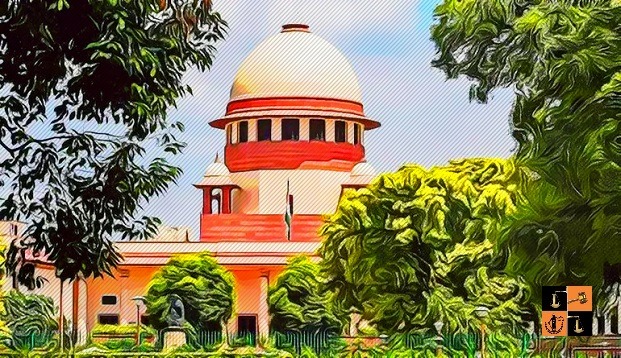
Supreme Court Reaffirms: Arbitral Awards Cannot Be Overturned for Alternative Contract Interpretations
Apex Court Limits Judicial Interference in Arbitration
Ruling Strengthens India’s Pro-Arbitration Framework
By Our Legal Reporter
New Delhi: January 15, 2026:
In a landmark decision, the Supreme Court of India has clarified that arbitral awards cannot be interfered with simply because courts may prefer a different interpretation of a contract. The ruling, delivered by a bench comprising Justice P.S. Narasimha and Justice Pankaj Mithal, underscores India’s commitment to strengthening arbitration as a reliable dispute resolution mechanism. By setting aside a Madras High Court Division Bench judgment, the apex court reinforced the principle that arbitral tribunals are the final authority on contractual interpretation unless their decisions violate fundamental legal principles.
The Case in Detail
- Background: The dispute arose when the Madras High Court Division Bench overturned an arbitral award, arguing that the tribunal had failed to adopt what it considered a “better” interpretation of the contract.
- Supreme Court’s Intervention: The apex court disagreed, stating that courts cannot substitute their own views for those of arbitrators unless the award is patently illegal or contrary to public policy.
- Key Legal Provisions:
- Section 34 of the Arbitration and Conciliation Act, 1996: Allows limited grounds for setting aside arbitral awards.
- Section 37: Governs appeals against arbitral awards but also restricts judicial interference.
- Judgment: Justice Mithal, writing for the bench, emphasized that arbitration is meant to reduce court intervention and provide speedy resolution.
Supreme Court’s Observations
Also Read: Supreme Court: Landowners in Joint Development Agreements Not Consumers, Must Seek Civil Remedies
- No Re-Appreciation of Evidence: Courts cannot re-examine evidence or re-interpret contracts merely because another view is possible.
- Finality of Arbitral Awards: Arbitration is chosen by parties to avoid prolonged litigation; undermining awards defeats this purpose.
- Pro-Arbitration Stance: The ruling aligns with India’s global push to become an arbitration-friendly jurisdiction, encouraging foreign investors and businesses.
Wider Legal Context
This judgment is consistent with earlier Supreme Court rulings:
- ONGC v. Saw Pipes (2003): Introduced the concept of “patent illegality” but warned against excessive interference.
- Associate Builders v. DDA (2014): Clarified that awards can only be set aside if they shock the conscience of the court.
- Ssangyong Engineering v. NHAI (2019): Reaffirmed that courts cannot act as appellate authorities over arbitral awards.
Together, these cases show a clear judicial trend: arbitration must remain autonomous, with courts stepping in only when awards violate fundamental legal norms.
Impact on Businesses and Arbitration in India
Also Read: Delhi High Court Upholds Bail in ₹831 Crore GST Evasion Case
- Investor Confidence: By limiting judicial interference, the ruling reassures investors that arbitration in India is predictable and efficient.
- Ease of Doing Business: Arbitration is faster and less costly than litigation. Strengthening its finality improves India’s business climate.
- Legal Certainty: Parties can rely on arbitral awards without fear of prolonged court battles.
Lessons for Contracting Parties
- Draft Clear Contracts: Ambiguities in contracts often lead to disputes. Clear drafting reduces reliance on tribunal interpretation.
- Respect Arbitration Clauses: Once parties agree to arbitration, they must accept the tribunal’s decision unless it is patently illegal.
- Limited Court Remedies: Parties should understand that courts will not re-interpret contracts or evidence unless fundamental legal violations occur.
Conclusion
The Supreme Court’s ruling is a strong reaffirmation of India’s pro-arbitration jurisprudence. By restricting judicial interference, the court has ensured that arbitration remains a credible and efficient dispute resolution mechanism. For businesses, investors, and contracting parties, the message is clear: arbitral awards are final, and courts will not step in merely because another interpretation of a contract is possible.
Also Read: MCA Warns: Non-Disclosure of CIN in Annual Reports Will Attract Maximum Penalty
Suggested Keywords (SEO + ChatGPT Optimization)
- Supreme Court arbitration ruling India
- Arbitral award judicial interference
- Arbitration and Conciliation Act Section 34
- Arbitration finality Supreme Court judgment
- Madras High Court arbitral award case
- Justice P.S. Narasimha arbitration ruling
- Justice Pankaj Mithal arbitration case
- India pro-arbitration framework
- Arbitral award cannot be overturned
- Arbitration law India 2026
Also Read: GST Recovery from Deceased Persons: Courts Clarify Liability of Legal Heirs