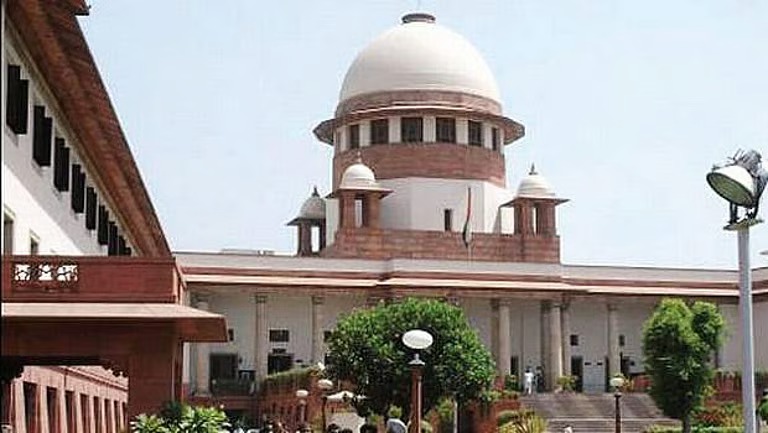
Supreme Court Dismisses Punjab & Haryana High Court’s Petition on Compulsory Retirement of District Judge
Bench Upholds HC’s Decision Quashing Retirement Order Against Judge Dr. Shiva Sharma
Judgment Highlights Judicial Independence and Limits of Administrative Authority
By Legal Reporter
New Delhi: February 14, 2026:
In a significant ruling, the Supreme Court of India has dismissed a petition filed by the Punjab and Haryana High Court challenging its own earlier decision that quashed the compulsory retirement of District Judge Dr. Shiva Sharma. The apex court’s verdict, delivered in February 2026, reinforces the principle that judicial officers cannot be prematurely retired without strong justification and underscores the importance of protecting judicial independence.
Also Read: Supreme Court: High Courts Must Address All Issues in Writ Petitions, Not Just One Point
Background of the Case
- In 2011, the State of Haryana ordered the compulsory retirement of District Judge Dr. Shiva Sharma at the age of 58, following a Full Court resolution of the Punjab & Haryana High Court.
- Dr. Sharma challenged the order before the High Court.
- In September 2025, a division bench led by Chief Justice Sheel Nagu and Justice Sanjiv Berry set aside the retirement order, holding that it was not justified.
- The Punjab & Haryana High Court, through its Chief Justice, filed a Special Leave Petition (SLP) before the Supreme Court, challenging this decision.
[Recommended Legal Resource]
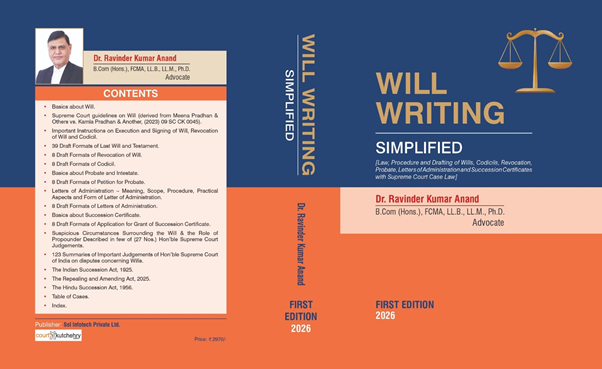
For readers interested in understanding the complexities of judicial service law, succession, and Supreme Court precedents, the book Will Writing Simplified [Law, Procedure and Drafting of Wills, Codicils, Revocation, Probate, Letters of Administration and Succession Certificates with Supreme Court Case Law] is a valuable resource. It provides practical guidance on drafting and interpreting legal documents, making it useful for lawyers, judges, and students.
Supreme Court’s Observations
A bench comprising Chief Justice of India Surya Kant and Justice Joymalya Bagchi dismissed the petition.
Key points from the ruling:
- The High Court’s view was “a possible one” and did not warrant interference.
- The Supreme Court appreciated that the Chief Justice of the High Court had chosen to file the SLP against a decision delivered on the judicial side, but ultimately upheld the relief granted to Dr. Sharma.
- The ruling emphasized that compulsory retirement must be based on clear evidence of inefficiency or misconduct, not merely administrative discretion.
Why This Case Matters
This case is important for several reasons:
- Judicial Independence: It reinforces that judges cannot be removed or retired arbitrarily.
- Checks on Administrative Power: The ruling limits the scope of administrative decisions taken by High Courts in relation to judicial officers.
- Precedent for Future Cases: The judgment will guide similar disputes involving compulsory retirement of judges.
- Public Confidence: By protecting judicial officers from unfair removal, the ruling strengthens public trust in the judiciary.
Also Read: Is Lending Cash to Relatives Illegal? Understanding Section 269SS of the Income Tax Act
Broader Context
The issue of compulsory retirement has been contentious in Indian judicial administration:
- In past cases, courts have upheld retirement orders when adverse service records or integrity concerns were proven.
- However, the judiciary has also intervened to protect officers when retirement orders appeared arbitrary or unsupported by evidence.
- This balance ensures accountability while safeguarding judicial independence.
Expert Opinions
Legal experts have noted that:
- The Supreme Court’s ruling sends a strong message that compulsory retirement cannot be used as a tool to silence or sideline judges.
- Some argue that while judicial independence is crucial, mechanisms must remain in place to address inefficiency or misconduct.
- Others see this as part of a broader trend of the Supreme Court reinforcing protections for judicial officers
Conclusion
The Supreme Court’s dismissal of the Punjab & Haryana High Court’s petition marks a decisive moment in Indian judicial history. By upholding the High Court’s decision to quash the compulsory retirement of Dr. Shiva Sharma, the apex court has reaffirmed the principle that judicial officers must be protected from arbitrary administrative actions. This ruling strengthens judicial independence and sets a precedent for future cases involving compulsory retirement.
Also Read: Supreme Court Allows Patent Mapping in Cancer Drug Dispute Between Bristol Myers Squibb and Zydus
Suggested Keywords for SEO & Faster Searches
- Supreme Court compulsory retirement district judge case 2026
- Punjab Haryana High Court compulsory retirement petition dismissed
- Dr. Shiva Sharma compulsory retirement case Supreme Court
- Judicial independence Supreme Court ruling India
- Compulsory retirement of judges India case law
- Supreme Court judgment compulsory retirement 2026
- Punjab Haryana HC vs Supreme Court compulsory retirement
- Judicial officer protection Supreme Court India
- Indian judiciary compulsory retirement disputes
- Will Writing Simplified book legal resource
Also Read: McDonald’s India Outlet Warned Over Rotten Tomatoes and Reused Oil: Food Safety Laws in Focus