Supreme Court: High Courts Must Address All Issues in Writ Petitions, Not Just One Point
Bench says ignoring multiple grounds raised in writ petitions is a fundamental flaw in judicial reasoning
Judgment reinforces duty of High Courts to provide complete and reasoned decisions under Article 226
By Legal Reporter
New Delhi: February 14, 2026:
The Supreme Court of India has ruled that High Courts must address all issues raised in writ petitions and not dispose of cases by deciding only on a solitary point while ignoring other grounds. The Court emphasized that such selective adjudication amounts to a fundamental flaw in judicial reasoning and undermines the constitutional duty of High Courts under Article 226 of the Constitution.
A bench led by Justice Dipankar Datta and Justice Prashant Kumar Mishra delivered this ruling while hearing an appeal against a High Court order that had dismissed a writ petition without addressing several key issues raised by the petitioner.
Case Background
- The matter arose from a writ petition filed under Article 226, where the petitioner had raised multiple grounds challenging administrative action.
- The High Court, however, decided the case only on one point and ignored the other issues.
- The petitioner appealed to the Supreme Court, arguing that the High Court’s failure to address all grounds amounted to denial of justice.
- The Supreme Court agreed, holding that High Courts must provide comprehensive and reasoned judgments covering all issues raised.
[Recommended Legal Resource]
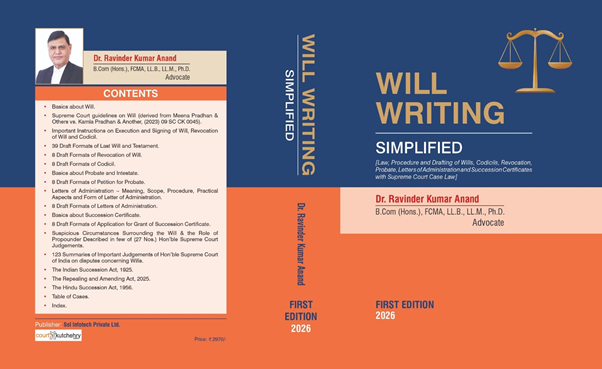
If you want practical guidance on drafting wills, codicils, and probate procedures, Will Writing Simplified [Law, Procedure and Drafting of Wills, Codicils, Revocation, Probate, Letters of Administration and Succession Certificates with Supreme Court Case Law] is an invaluable resource. It provides practical insights and case references, making it useful for lawyers, law students, and researchers.
You can access it here: Amazon | Flipkart
Supreme Court’s Key Observations
- Duty under Article 226: High Courts are constitutionally bound to examine all issues raised in writ petitions.
- Fundamental flaw: Deciding on a solitary point while ignoring others is a serious judicial error.
- Reasoned orders: Courts must provide detailed reasoning to ensure transparency and fairness.
- Judicial accountability: The ruling reinforces that High Courts cannot abdicate responsibility by issuing incomplete judgments.
Implications of the Judgment
- For High Courts: Strong reminder to deliver comprehensive judgments addressing all grounds raised.
- For Litigants: Ensures that petitioners receive full consideration of their grievances.
- For Judicial System: Strengthens accountability and transparency in writ jurisdiction.
- For Governance: Reinforces constitutional principles of fairness and due process.
Broader Legal Significance
This ruling is significant because writ petitions under Article 226 are a powerful constitutional remedy against administrative and governmental actions. By insisting that High Courts address all issues, the Supreme Court has ensured that writ jurisdiction remains a robust safeguard for citizens.
It also aligns with the principle of reasoned judgments, which is central to judicial accountability and public trust in the legal system.
Conclusion
The Supreme Court’s ruling that High Courts must address all issues in writ petitions is a landmark affirmation of judicial responsibility. By declaring that ignoring multiple grounds is a fundamental flaw, the Court has strengthened the principles of fairness, transparency, and accountability in constitutional adjudication.
This judgment ensures that writ jurisdiction continues to serve as a comprehensive remedy for citizens, reinforcing the role of High Courts as guardians of constitutional rights.
Suggested Keywords for Faster Searches
- Supreme Court writ petition ruling India
- High Courts must answer all issues Article 226
- Fundamental flaw ignoring writ petition grounds
- Supreme Court comprehensive judgments writs
- Writ jurisdiction High Court duty India
- Article 226 writ petition Supreme Court case
- Reasoned judgments Supreme Court ruling
- Judicial accountability writ petitions India
Also Read: Supreme Court Clarifies Section 29A: Arbitrator Substitution Not Automatic After Mandate Ends